Spooky sprites, creative coders, and growing confidence: A Code Club story from Maine

At Veazie Community School in Veazie, Maine (USA), Code Club is more than an after-school activity — it’s a creative space where young people explore, experiment, and grow into confident makers.

Code Club mentor Adrián Arias Palomo has been running the club for several years, and along the way has seen everything from spooky Scratch projects to former club members heading off to college with coding skills they still use today.

A group of children and an adult pose together in front of a screen displaying 'VCS CODE CLUB.' The children, showing various hairstyles and playful expressions, participate in a coding club activity.

Projects that spark excitement

Some projects just click — and for Adrián’s club, timing and theme can make a big difference.

“The Scratch Ghostbusters project is always a hit around Halloween,” Adrián says. “I’m consistently impressed by how motivated creators become when the theme is spooky.”

The project’s success isn’t just about ghosts and ghouls, though; its open-ended nature gives creators plenty of room to express themselves. By choosing their own sprites and customising how their projects behave, learners can make something that feels truly their own.

Creators often also have varied making styles and preferences, and Adrián has seen this variety play out in his club sessions too. For example, a version of the Mandala Scratch project proved especially popular with young people who enjoy more artistic, visual work.

Two children with green hair sitting in a library on blue couches, each using a laptop. Shelves of books are visible in the background.

When young people surprise you

Ask any Code Club mentor, and they will tell you that some of the best moments happen unexpectedly. Adrián experiences those sorts of moments regularly.

“They are constantly surprising me with their creativity,” he says.

One standout example came while creators were recreating the classic Google Chrome Dino game using Microsoft MakeCode Arcade. One creator decided to redesign the sprites to make their own unique and creative version of the game. You can try it yourself here.

And in Adrián’s experience, the surprises don’t stop when young people leave the club.

“I’ve also been pleasantly surprised when young people who are no longer in Code Club share games and projects they’ve continued to work on independently,” Adrián explains. “It’s incredibly rewarding to see them grow into confident, independent coders.”

With the Code Club having been established at the school for several years now, some of Adrián’s earliest creators have finished their schooling and are now in higher education or work. For Adrián, seeing that long-term impact has been one of the most meaningful parts of running the club.

Lessons learned along the way

One of Adrián’s biggest takeaways is the importance of listening.

“Giving young people more agency and a voice in what they want to learn truly pays off,” he says.

By tailoring learning to young people’s interests, the club has expanded its range of activities, covering more projects and technologies. Learners have explored physical computing with micro:bit and Circuit Playground Express, experimented with interactive storytelling using Bitsy, and dived into puzzle game design with PuzzleScript.

That flexibility has benefited everyone — including Adrián himself.

“I have learned a lot along the way!” he adds.

Support from the wider school community has also had a big impact. Adrián is quick to acknowledge the role of a flexible, encouraging environment.

“I’m very fortunate to work in a small, supportive school that values this kind of flexibility. A special shout-out to Principal Timothy Tweedie and librarian Martha Shannon for their support and for allowing us to use such a wonderful space.”

Two children in a library sitting on a blue couch; one is reading a book while the other uses a laptop, with large windows showing snow outside.

Whether it’s spooky Scratch games, fun pixel dinosaurs, or creators continuing to code long after they have left the club, Adrián’s story is a powerful reminder of what happens when young people are given space, support, and a voice in their learning.

Want to start your own Code Club?

If you have been inspired by Veazie Community School, learn how you can start a club in your community today.

Coding, creativity, and community: Our 2025 Code Club stories

Every week, in classrooms, libraries, and community spaces around the world, young people gather to make, tinker, and imagine with code. Behind every project is a volunteer, a teacher, or a parent helping to spark curiosity and confidence.

At Code Club, it’s these moments of connection and creativity that remind us what community really means. As we look back on 2025, we’re celebrating you — the people who make it all possible.

A group of children and an adult stand in a classroom, smiling and holding colorful signs that say 'Join the club', 'We made this', 'code club', and 'Be cool'.

Community highlights

USA: Powered by sourdough — a big start for 8-bit Code Club in Minnesota

It’s been an exciting start for the 8-bit Code Club in Minnesota, USA, which launched this autumn in the local library and runs on Saturday afternoons. Parents say they’re grateful to Code Club and the library space, which provide their children with access to technology they may not have at home.

The club leader has also been creative in raising funds for equipment, selling sourdough bread at the local farmers’ market. Thanks to her efforts, the club has already purchased several Raspberry Pi computers and monitors, with micro:bits next on the wishlist.

A display case at a farmers' market featuring various types of artisanal bread, including plain, honey walnut, rye with caraway, olive herb, and pumpkin spice.

India: Coding for change — Gujarat’s girls break barriers

A visit to the Welspun Code Clubs in Gujarat, India highlighted a remarkable group of girls who have overcome significant barriers to education. Many had previously been unable to attend school, but with strong community support — including families agreeing to send girls once they were permitted to wear traditional attire instead of uniforms — they are now confidently creating Scratch projects and engaging with technology.

“Meeting these girls was truly inspiring. Watching them code with such pride, knowing the challenges they’ve overcome, reminded me how Code Club can shift perceptions and shape brighter futures.” – Suraj Jena, Programme Coordinator

A group of six young individuals, dressed in colorful traditional attire, smiles together in a community space, showcasing camaraderie and enthusiasm for technology and coding.

Kenya: From wildlife to heritage — Lamu’s coders shine

Code Club mentor, Mariam Abubakar from Mahmoud Bin Fadhil Boys School, Lamu, Kenya shares that her proudest moment this year was guiding her brilliant coders as they created and showcased four fantastic Scratch projects as part of Coolest Projects online showcase:

These projects blended coding with storytelling, environmental awareness, and national pride. Watching the students present with confidence and joy was a powerful reminder of how digital creativity can uplift young voices and celebrate heritage.

Remember, Coolest Projects 2026 opens on Wednesday 14 January

A group of young students collaborate around a table, engaged in coding activities on tablets in a classroom setting.

Ireland: Big discoveries in a small village — Kinnitty’s coders grow

For Kinnitty Code Club in rural Ireland choosing a single highlight was nearly impossible. But expanding their age range to 7+ was a standout moment.

“Witnessing the sheer shock and delight on these young creators’ faces when their first code runs is a feeling that never fades. That spark of discovery instantly reminds me why I have dedicated 13 years to running my club.” – Darren, Code Club mentor 

A group of young students in a classroom setting holds up devices while engaging with a computer screen that displays a coding project.

Australia: Young minds, big missions — Code Club Kawana steps up

Kaye shares how at Kawana Scouts, Code Club Kawana, Australia creators loved being testers for Moonhack projects earlier this year. It was their first time in the role, and they were thrilled to put their coding skills to the test — not just building from instructions, but thinking critically about how each project worked, how it could be improved, and whether it all made sense. Celebrate the success of this challenge and read the Moonhack insights blog

“They felt proud to contribute to a larger project, and even more excited to be on a ‘secret mission’ testing the projects before the competition began.” – Kaye North

Three children wearing green shirts, with headphones on, smiling and giving thumbs up while sitting at a table with laptops and stationery.

Celebrate together

Wherever you are in the world, we hope you feel proud of what you and your club have achieved this year. Together, you’ve helped make coding accessible to young people all over the world, and that’s something worth celebrating.

See you in 2026 and don’t forget to keep coding!

Mentor voices: Bootham School Code Club’s success story, with mentor Tom Lund

Ever wondered what makes a Code Club successful and inspiring? We spoke with Tom Lund, a mentor from Bootham School Code Club in York, to learn about their journey and what makes their club thrive.

A smiling mentor from Bootham School Code Club in York, wearing a Code Club t-shirt, is featured against a green background with the text 'Mentor voices'.

How did you get started with Code Club?

For two years, I’ve had the privilege of being a mentor and trustee at my local coding club. The atmosphere there is infectious; the passion the creators bring to each session is amazing. The leader encouraged me to set up a Code Club in the school where I teach, which I did! Since then, I’ve seen so many different creators learn by making, allowing them to celebrate their impressive achievements.

What does a typical Code Club session look like at Bootham School?

My Code Club runs weekly, every Monday and Friday during term time, and we tackle a variety of projects. As the mentor, I set a weekly theme, which could be something I’ve prepared or an idea suggested by the creators themselves.

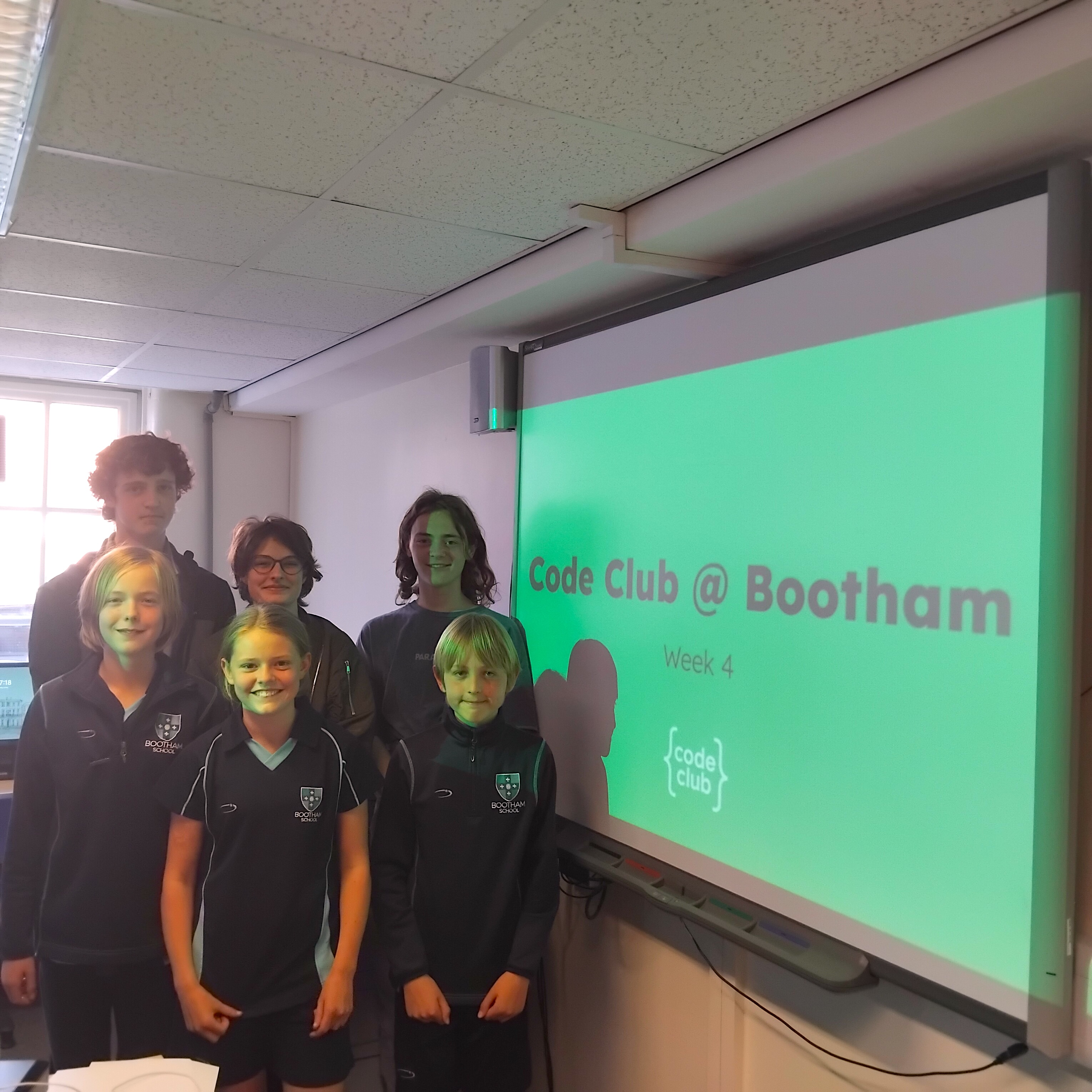
A group of six children and a mentor posing together in front of a projector screen displaying 'Code Club @ Bootham Week 4' in a classroom setting.

Depending on the project ideas I develop, there might be templates, instructions, or starter code. Sometimes, my themes align perfectly with Code Club projects, and sometimes we will use other projects. I always make sure creators know that if they don’t want to participate in the week’s theme, they’re free to work on any project they choose, allowing their curiosity and creativity to flourish.

During each session, I provide guidance as needed but strongly encourage problem-solving by the creators themselves or their peers. I also fully embrace the motto: “If you make it, then you can play it.” 

In the last 10 minutes of each session — each one runs for an hour — we celebrate each other’s achievements, and creators can show off their projects if they wish. I also hand out certificates from the Code Club resources page, and we applaud our creators. Finally, I ask them if they have any particular themes they’d like to explore the following week.

Two young participants of Code Club at Bootham School, holding a micro:bit project and a completion certificate, with a presentation screen in the background displaying 'Code Club @ Bootham Week 4'.

What makes your club thrive?

Our Code Club fosters a very relaxed environment where creators can explore whatever they wish, however they wish. This could mean following a tutorial, a Code Club project path, or even starting from scratch with their ideas.

Sometimes, if I feel a certain programming language, like Scratch, is being overused, and creators need a nudge to try something new, I’ll suggest we take a break from it for a bit. This encourages them to discover new technologies they might love, removing any fear or anxiety around trying different tools and keeping them curious and invested.

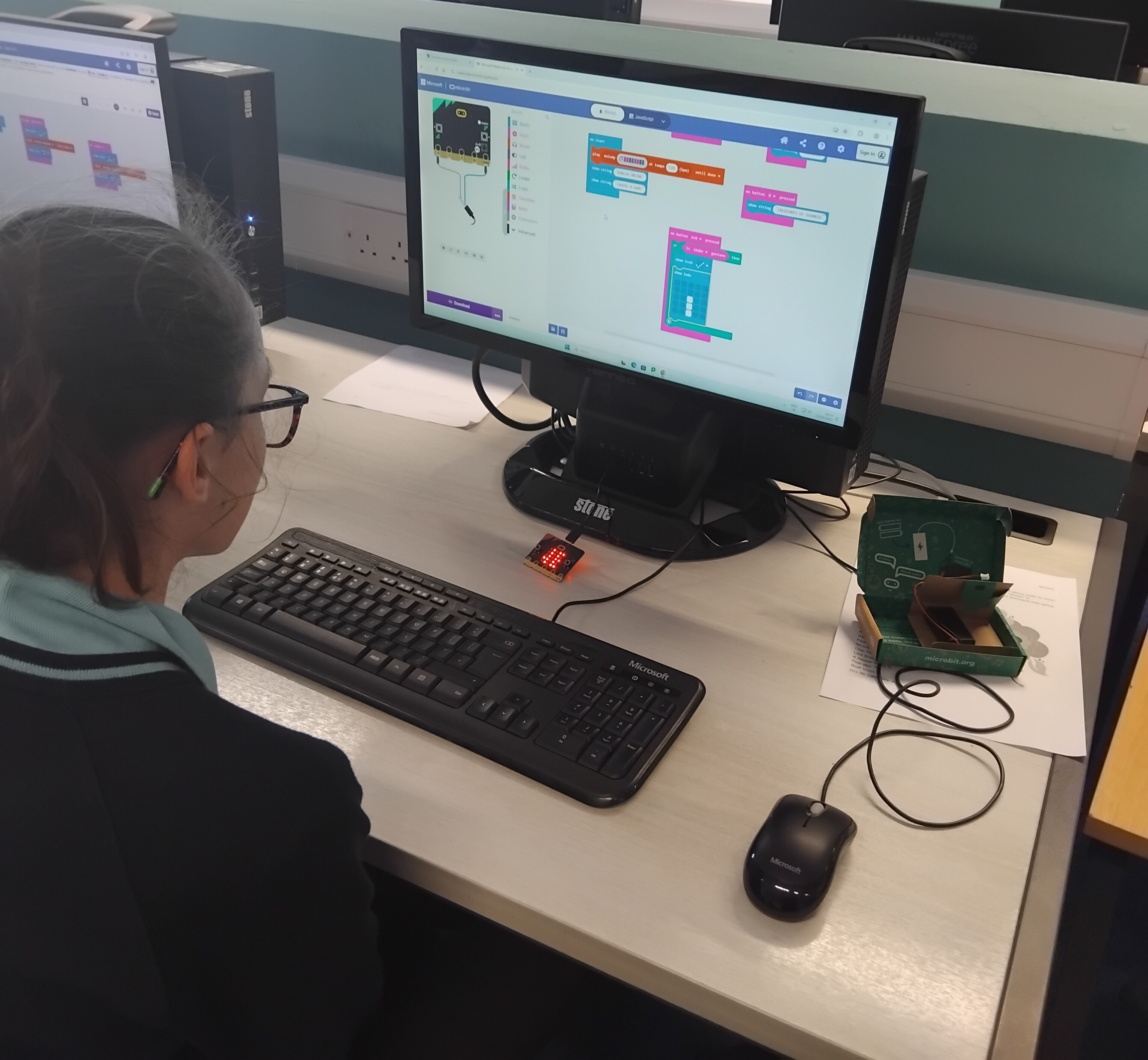
A student working on a coding project at a computer, using a programming interface with colorful blocks on the screen.

Because my Code Club is within a school and operates as an extracurricular activity, it’s built into students’ timetables. They pick an activity each term and stick with it. This has helped maintain continuity in creator skills and has even fostered young mentors who guide new students transitioning into Code Club.

Describe your club in three words

This is a tough one, but my three words would be: creative, ambitious, encouraging.

What advice would you give to someone starting a Code Club?

My biggest piece of advice is to use the resources that are available. The Code Club website has so many helpful tips, documents, and project ideas to get you started. You can also look for other nearby clubs and see if you can speak to their leaders or champions for advice. It’s always best to try, because if you don’t, you’ll never know what could be!

If Tom has inspired you to set up a Code Club in your community, explore our ‘Run a club’ page to learn how to get started.