Micro-interview with Code Club Growth Partner, Generación Tec 

Enjoy our micro-interview blog series, where we chat to educators and young coding enthusiasts and hear about their Code Club experience. 

Generación Tec is a Code Club Growth Partner in Peru. In 2019, they started to grow the club network in the capital, Lima, through a project managed by the British Council.

Building a sense of community is an important part of Code Club; this can be done by celebrating young people’s successes and by providing ongoing support to volunteers. Generación Tec shines a light on how they’re doing just this in Peru.

Let’s get started…

Why do you believe it is important to recognise the achievements of young people in Code Clubs?

Since computing education is not part of the Peruvian curriculum, it is important to provide students with spaces to learn and develop computing skills, and more importantly, their computational thinking. Also, it is important to foster STEAM education and the participation of more girls in STEAM careers, and Code Clubs are the perfect space for that.

There is a “diploma culture” in Peru. People are used to receiving certificates and diplomas for their participation and achievement, and they become part of their “Curriculum Vitae”. Parents like to share their kids’ accomplishments, as they are considered a reflection of their “good job” as parents too.

How does Code Club build a sense of community among learners? 

By sharing the opportunity with their peers and being able to solve problems together, they create bonds that go beyond the Code Club space. It gives young people the opportunity to share what they have learned with a sense of pride and belonging. 

It is important for them to know that there are other young people that share their interests, and to feel they are not the “weird” ones. Sometimes an interest in science and computing in early ages is considered less important than an interest in sports, for example, and is not promoted. 

That is why it makes it even more important to provide a fun, safe space to develop their talents.

Can you share how you’re building a community of volunteers for Code Clubs in Lima?  

In August, we started with an open call for volunteers, and an information session for school leaders, where we will promote the opening of new Code Clubs.

We have found that the main setback is the lack of confidence of teachers and volunteers, and their fear to “fail” as Code Club leaders. By providing early training and ongoing support, we will address that particular issue and help Code Clubs live longer, healthier, more fun lives. 

Thanks Generación Tec, keep up the good work!

If you enjoyed this micro-interview, read our micro-interview with Sue and learn about her experiences of using the Code Club resources and projects in her club, in the UK. 

If Generación Tec’s journey with Code Club has sparked your interest, explore how you can become a Code Club Global Partner!

Micro-interview with Code Club member Terrell

In our micro-interview blog series, we’re chatting to educators and young coding enthusiasts and hearing about their Code Club experience.

Worth Valley Primary School in Keighley, England launched their Code Club in spring 2023, and club members have been working through our Introduction to Scratch path.

Each week, 15 young people take part in the club sessions, and this is where we first met Terrell, aged 9, a budding coder with a passion for coding and learning new skills.

Terrell told us what he enjoys about attending the new after-school Code Club at his school.

Enjoy this micro-interview with Code Club member Terrell 

Let’s get started…

What inspired you to start coding?

What inspired me was when I first saw coding, I saw that it was great to help people make things happen in programs and make games, and I wanted to have a go as I really like games and would love to make my own games so that I can play them and evaluate them and give myself feedback to improve it, then send the programs to share with others.

What do you enjoy the most about coding?

The best thing about coding is all the things we have to do. We’ve learnt how to follow programs and make things happen and then share them with everyone and show how proud we are of our code. I’ve enjoyed everything we do in Code Club, and learn new skills as we complete each project.

How do you help your Code Club friends with their coding projects? 

I help them if they are stuck. I like to help, and if I can, I’ll find a solution, or if I know how to make them succeed, I will help them. It’s great to help each other and if we are not sure, we ask each other or persevere to find the answer.

What’s your favourite project that you have made with code? 

My favourite project was making my own book as I got to use all my skills and choose my own sprites. You can replay it and add more if you want to, or listen to it whenever I want to.

Describe your Code Club in three words.

Educating. Fun. Programming.

Thank you, Terrell!

If you enjoyed this micro-interview, read our micro-interview with Sue and learn about her experiences of using the Code Club resources and projects in her club, in Norfolk, England.

You don’t need any coding experience to run a Code Club, and you can help more young people like Terrell learn vital coding and digital skills. Start a club today!

Our Code Club rules! How to have fun and set boundaries

Creating guidelines for your Code Club can be a simple way to help your young coders make the most of the non-formal environment that Code Club offers. In this blog, we share a few ideas to help you get started.

Code Clubs are fun, creative, and at times wonderfully chaotic spaces. If you’re a teacher running a club at your school, it’s not always easy to transition from the role you take during class time, to a club leader hosting a more relaxed space. If you are a Code Club volunteer, there can also be challenges with entering a school as a new and unfamiliar face.

A classroom setting with young people sat at tables working on laptops.
Melbourn Code Club

Club leader Janine Kirk at the King’s Academy in Stoke-on-Trent shared how the informal element of Code Club has changed the learning experience for both her and her students:

“In classrooms it’s often quite structured, whereas in Code Club I can be a little bit more free and they can get to know me. We can have a bit of a joke – the students really enjoy that!”

Code Clubs should be less structured than the school day, but encouraging an atmosphere where everyone takes care of themselves, club equipment, and each other can help turn a good Code Club into a great one! One way to do this is to get your young coders to come up with a set of club rules with you. This helps create a Code Club that everyone can enjoy, whilst providing boundaries that keep your club safe, happy, and fun.

Create your club rules together

At the start of your Code Club journey, you’ll need to spend some time figuring out how best to run your club and then you can fine tune the details as you go. Involving your young coders in creating your club guidelines is a simple icebreaker activity, and being involved in the process can provide them with a sense of ownership and expectation around their behaviour.

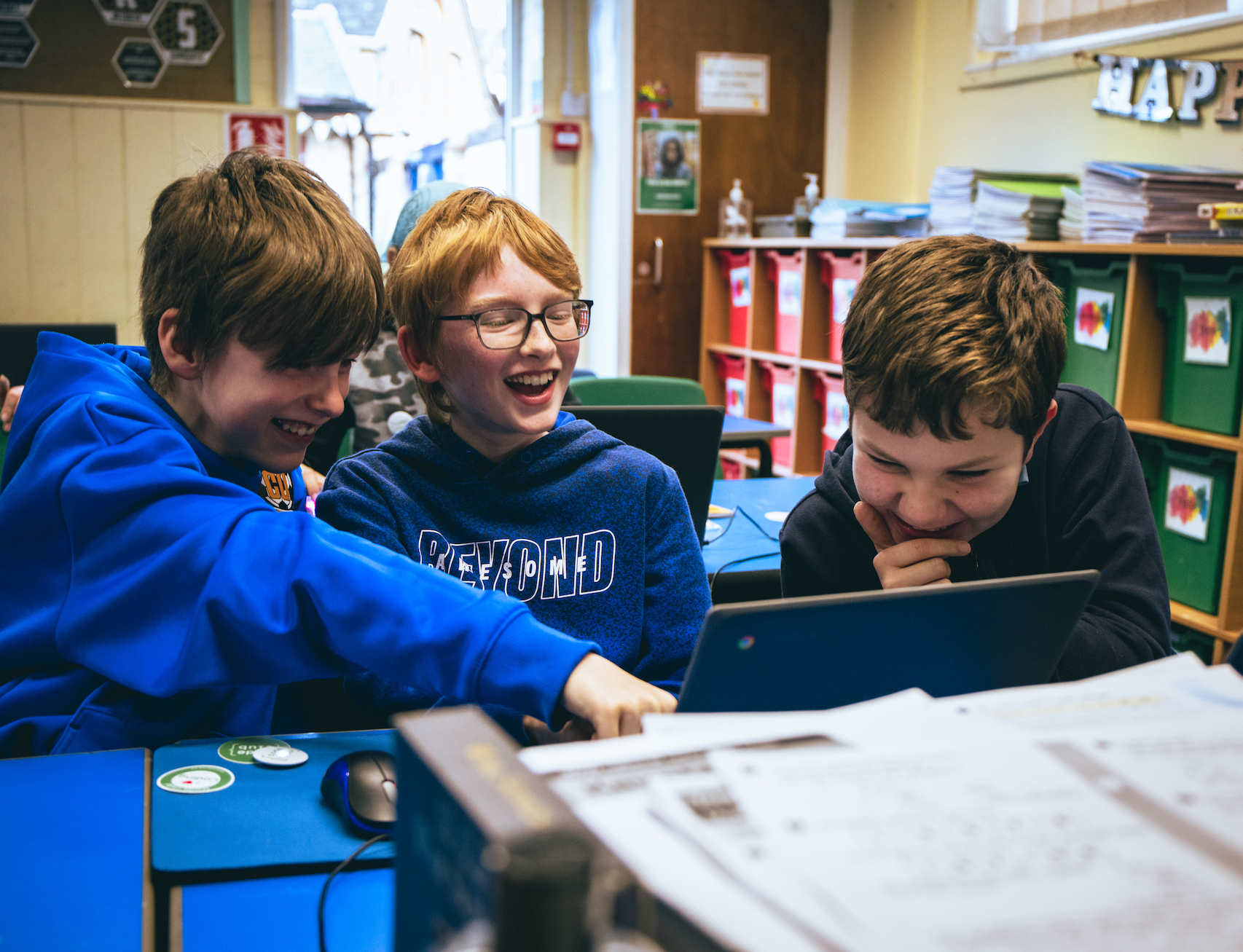
Three boys in a classroom gathered around one laptop, laughing.
Working together to set club rules

Spend ten minutes during your first session discussing how your Code Club should run, with club attendees giving their ideas on how to make that vision a reality. Right from the start, you can use this as a chance to model expected behaviours: for example, should your club members raise their hands to share an answer, or are you happy for them to call out ideas?

Once you’ve decided on your final list, you can write them up using the “Our Code Club rules” template in your dashboard, or you could ask your club members to design their own reminders of the rules using paper and coloured pens or pencils.

Club rules template. Be kind, Listen to other, Have fun.
Club rules template

All ideas are welcome!

It’s up to you to choose ideas that will let your coders and Code Club thrive. Code Clubs should be fun and safe spaces, so your club rules could cover anything from behaviours that encourage exploration and imagination, to requests outlining how everyone should set up and pack away equipment each week.

If you need some inspiration to get started, here are a few ideas you could suggest:

  • Be kind, respectful, and treat others the way you would like to be treated.
  • During Code Club sessions, you can call the Club Leader by their first name. 
  • If someone is talking, make sure to listen. It’s okay to chat to each other during Code Club, but we listen quietly when someone is speaking.  
  • We use the moto ‘Ask three, then me‘ to encourage young people to try self-help strategies before asking a mentor. Encourage creators to:
    • 1. Ask themselves (test the code and try and find the error) 
    • 2. Ask their peers
    • 3. Ask a search engine
    • 4. If they still need help, ask a mentor
  • Be mindful of your behaviour online. Don’t share any personal information about yourself and follow any guidance shared. 
  • Take care of the equipment. Don’t eat or drink near computers, and put everything away neatly at the end of the session. 
  • Have fun and be creative! Enjoy learning new things and don’t be afraid to let your imagination run wild!   

What rules will you include in your Code Club? Let us know on social media using the hashtag #MyCodeClub