Mentor voices: Bootham School Code Club’s success story, with mentor Tom Lund

Ever wondered what makes a Code Club successful and inspiring? We spoke with Tom Lund, a mentor from Bootham School Code Club in York, to learn about their journey and what makes their club thrive.

A smiling mentor from Bootham School Code Club in York, wearing a Code Club t-shirt, is featured against a green background with the text 'Mentor voices'.

How did you get started with Code Club?

For two years, I’ve had the privilege of being a mentor and trustee at my local coding club. The atmosphere there is infectious; the passion the creators bring to each session is amazing. The leader encouraged me to set up a Code Club in the school where I teach, which I did! Since then, I’ve seen so many different creators learn by making, allowing them to celebrate their impressive achievements.

What does a typical Code Club session look like at Bootham School?

My Code Club runs weekly, every Monday and Friday during term time, and we tackle a variety of projects. As the mentor, I set a weekly theme, which could be something I’ve prepared or an idea suggested by the creators themselves.

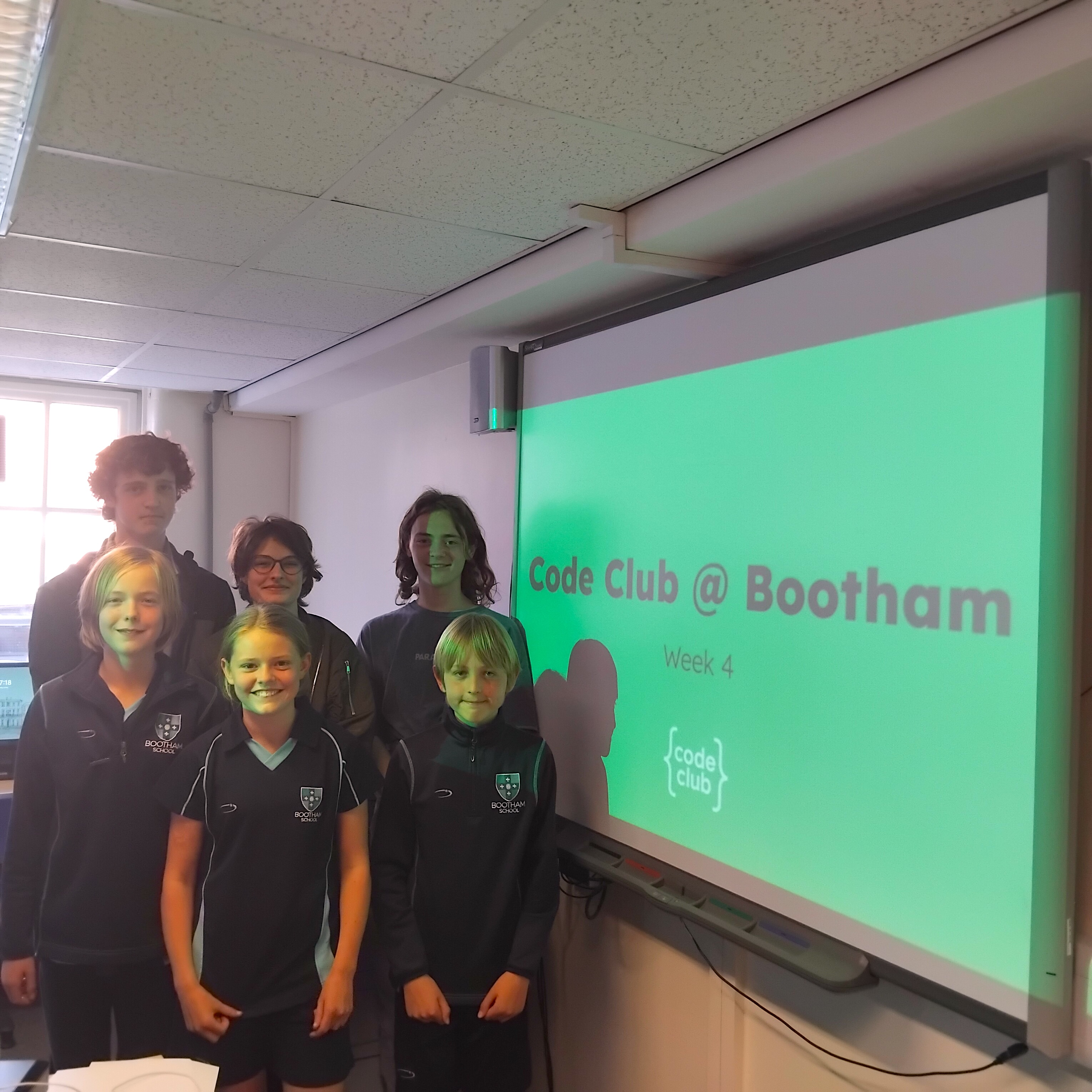
A group of six children and a mentor posing together in front of a projector screen displaying 'Code Club @ Bootham Week 4' in a classroom setting.

Depending on the project ideas I develop, there might be templates, instructions, or starter code. Sometimes, my themes align perfectly with Code Club projects, and sometimes we will use other projects. I always make sure creators know that if they don’t want to participate in the week’s theme, they’re free to work on any project they choose, allowing their curiosity and creativity to flourish.

During each session, I provide guidance as needed but strongly encourage problem-solving by the creators themselves or their peers. I also fully embrace the motto: “If you make it, then you can play it.” 

In the last 10 minutes of each session — each one runs for an hour — we celebrate each other’s achievements, and creators can show off their projects if they wish. I also hand out certificates from the Code Club resources page, and we applaud our creators. Finally, I ask them if they have any particular themes they’d like to explore the following week.

Two young participants of Code Club at Bootham School, holding a micro:bit project and a completion certificate, with a presentation screen in the background displaying 'Code Club @ Bootham Week 4'.

What makes your club thrive?

Our Code Club fosters a very relaxed environment where creators can explore whatever they wish, however they wish. This could mean following a tutorial, a Code Club project path, or even starting from scratch with their ideas.

Sometimes, if I feel a certain programming language, like Scratch, is being overused, and creators need a nudge to try something new, I’ll suggest we take a break from it for a bit. This encourages them to discover new technologies they might love, removing any fear or anxiety around trying different tools and keeping them curious and invested.

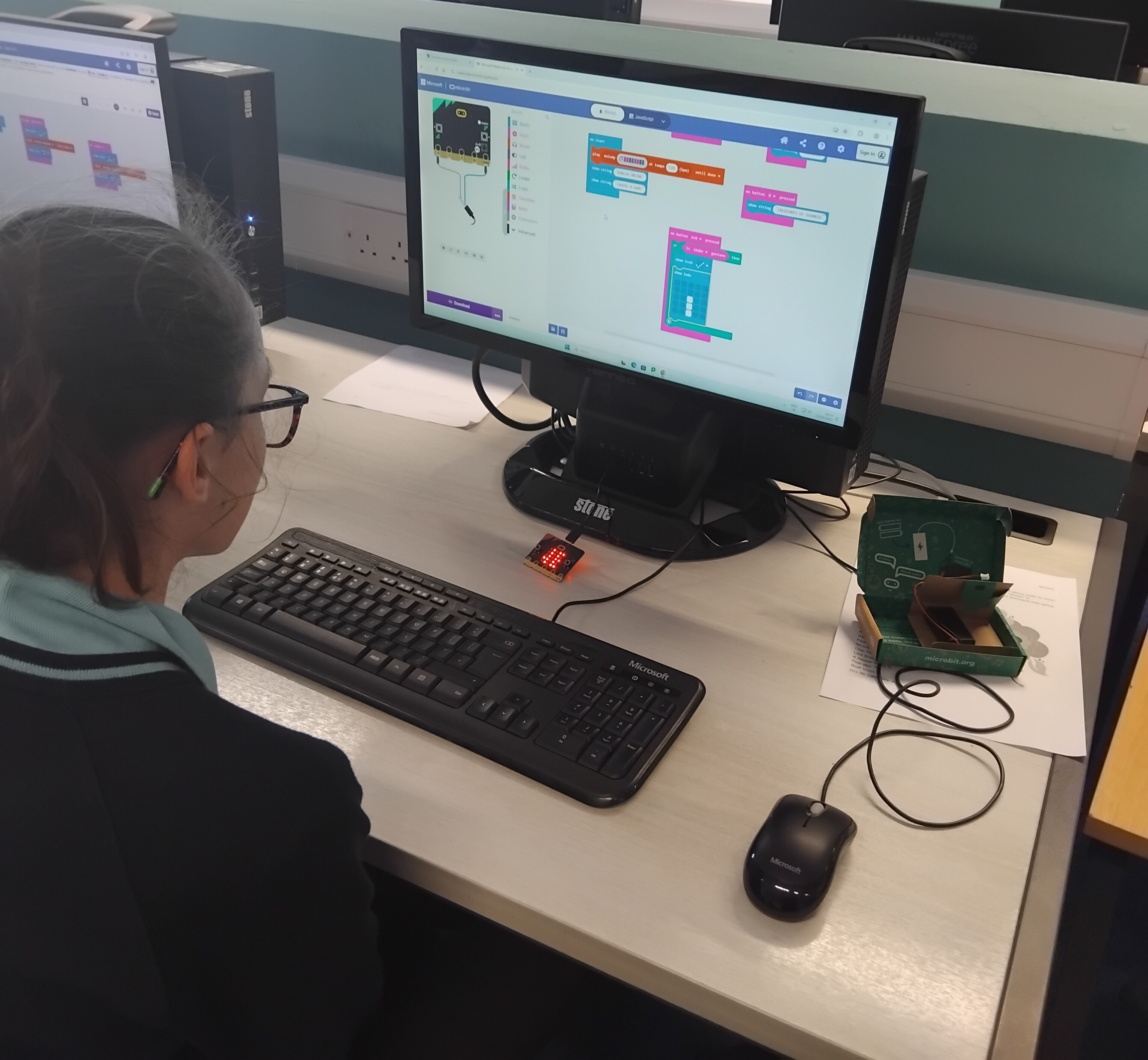
A student working on a coding project at a computer, using a programming interface with colorful blocks on the screen.

Because my Code Club is within a school and operates as an extracurricular activity, it’s built into students’ timetables. They pick an activity each term and stick with it. This has helped maintain continuity in creator skills and has even fostered young mentors who guide new students transitioning into Code Club.

Describe your club in three words

This is a tough one, but my three words would be: creative, ambitious, encouraging.

What advice would you give to someone starting a Code Club?

My biggest piece of advice is to use the resources that are available. The Code Club website has so many helpful tips, documents, and project ideas to get you started. You can also look for other nearby clubs and see if you can speak to their leaders or champions for advice. It’s always best to try, because if you don’t, you’ll never know what could be!

If Tom has inspired you to set up a Code Club in your community, explore our ‘Run a club’ page to learn how to get started.

Three words that say it all: Code Club creators sum up their experiences!

We often talk about the benefits of Code Club — the problem-solving, the creativity, and confidence building. But who better to tell you what Code Club is really like than the brilliant young creators who come here every week?

We asked a handful of Code Club creators from around the world to describe their experience in just three words. The answers were as diverse and exciting as their coding projects, giving us a glimpse into what makes Code Club special.

Here’s what they said:

Fabian, Barbican CoderDojo, London, UK

“Boundless, because it doesn’t have any boundaries. Creative because you can do anything and interesting because you can do all those things.”

A young boy sitting at a computer in a classroom setting, sharing his thoughts on Code Club with the quote 'Boundless, creative, and interesting'.

Jayantika, Bidkar Foundation Code Club, Pune, India

“I started as a creator and now I am a youth mentor for Code Club. What I love most is seeing children in rural areas grow confident in coding and problem-solving. It’s inspiring to watch them transform, knowing they’re gaining skills that can open doors to global opportunities.”

A young female mentor teaching coding to children in a classroom, with a focus on the quote 'Uplifting, rural, talent' highlighting the positive impact of Code Club.

McKinnely, Normandale Hills Elementary Code Club, Minnesota, USA 

“I like attending Code Club, because I get to meet with a bunch of kids in my grade and above my grade. So that’s the really fun part.”

Child wearing headphones smiling while sitting in front of a presentation screen with the Code Club logo.

What three words would you use to describe Code Club? Let us know on LinkedIn!

Mentor voices: Chidi shares the joy of coding alongside Deaf creators

Codeant Technology Hub is a Nigerian organisation with the mission to foster educational empowerment through programming. Working across Imo State, they partner with Code Club to nurture a community of curious, lifelong creators.

Codeant took up a valuable opportunity to set up a club with a group of Deaf young people and learn alongside them. For many of the young people, the club was the first time in their lives that they had used a computer.

A mentor helps a child with a laptop in a classroom, under the banner “Mentor voices” from Code Club Nigeria.
Meet Chidi

Codeant’s Co-Founder, Chidi Duru, shares insights from his time leading a Code Club for Deaf creators.

What were your first thoughts and feelings when you started planning your Code Club?

I was excited about the opportunity to unlock a new world for the young people — coding, creativity, and problem-solving. But I also felt the weight of the challenge: how do I teach coding to kids who are learning to use a computer for the first time, and who communicate differently?

I also knew there could be issues with the available infrastructure: old or slow computers, power outages, and limited access to the internet or learning aids. I was determined, though, because I believe that inclusivity in tech starts with giving everyone — regardless of ability — a fair chance to learn and grow.

How did you make your Code Club accessible for Deaf creators?

I approached it with simplicity, clarity, and accessibility in mind. First, I broke down the Code Club Introduction to Scratch project path into visual step-by-step guides so the creators could follow along independently.

To support communication, I have an experienced sign language teacher working with me, and I’m learning it myself.

A group of young creators seated at desks with laptops, attentively participating in a coding lesson. A male instructor is standing beside a projection screen, explaining coding concepts to the creators, while a female teacher uses sign language.
Sign language teacher supporting the Code Club

I also integrated live demonstrations and visual storytelling. For example, instead of saying “Make the cat move 10 steps”, we use real-life gestures and visual cues, like arrows and body movement, to help understanding. We use other non-verbal cues, like raising hands to ask for help, thumbs up for “I’m ready”, and applauding (by waving raised hands) to celebrate achievements.

These simple adaptations have made the learning environment more inclusive, interactive, and fun for everyone.

What’s it like to see the creators finish a project?

The joy is unmistakable, even without words. Their expressions say it all: wide smiles, excited gestures, clapping, and proudly showing their screens to their peers. 

Seeing them go from hesitant to confident, from passive observers to active creators, is incredibly fulfilling. You can feel their sense of ownership and pride — it’s not just about finishing a task, but about building something of their own for the first time. That confidence boost is priceless.

A group of young people, including Deaf youth, engaged in a coding club session at a table with laptops, focused on their computers and printed materials in a classroom setting.
Creators working on their projects

Do your creators solve problems in unique ways that could help others?

Absolutely. Because they process information visually and often non-verbally, they naturally approach problems in creative, out-of-the-box ways. I’ve seen them troubleshoot by mimicking sprite movements with their hands or by physically demonstrating what the code should do.

Their ability to focus on visual logic and spatial awareness is something all learners could benefit from. It’s a reminder that coding is not just about syntax — it’s about thinking, creativity, and expression.

Most importantly, they are learning that they can do hard things, and that mindset will
serve them for life.

How has this experience changed your ideas about teaching, accessibility, and tech for young people?

I have come to deeply appreciate the power of inclusive teaching, how adjusting methods to meet learners where they are can unlock so much potential.

Technology should be a leveller, not a divider. This experience has shown me that with patience, the right tools, and empathy, every child, regardless of ability, can become a tech creator. Accessibility is not an add-on — it’s a foundation for equitable learning.

A group of young people engaged in a coding class, seated at tables with laptops in a classroom setting. The environment is bright and informal, showcasing a diverse group of participants learning together.
Welcome to Code Club!

What message would you share with others who are starting a Code Club for creators with diverse accessibility requirements?

Start small, but start. You don’t need to have all the answers, just the heart to try and learn alongside your students. Inclusion is not about perfection, it’s about presence and persistence.

These creators have so much to offer. With your support, they will show you what is possible when tech truly becomes for everyone.

Inspired by Chidi to start your own journey with Code Club? Join our warm and welcoming community of mentors today