Mvelo Hive Trust: Building confidence in young coders through Code Club

Mvelo Hive Trust, a global Code Club Partner, is a non-profit organisation whose mission is to enable marginalised groups and communities in Zimbabwe to gain access to education, technology, and skills through activities like Code Club.

Three young girls engaged in a coding activity, focused on a laptop with Code Club stickers, in a classroom setting.

Ruhee Shah, Global Partnerships Coordinator at the Raspberry Pi Foundation spoke to Blessed Moyo, Co-founder and CEO of Mvelo Hive Trust about their work and how Code Club inspires confidence in young creators.

From inspiration to a network of Code Clubs

Inspired by Africa Code Week, a digital literacy programme set up in 2015 to empower young people across the continent with essential coding and digital skills, Mvelo Hive Trust wanted to provide regular digital skills training, by offering consistent sessions through a network of Code Clubs. Their experience at Africa Code Week highlighted a significant gap: students in low-income communities lacked consistent, hands-on exposure to programming and collaborative problem-solving. There was no local space for them to regularly explore coding, troubleshoot, and develop projects. They noticed that many young students, despite their enthusiasm for creating games with Scratch, had little access to even basic coding tutorials.

“We wanted to equip learners with resources and digital skills that went beyond just learning how to code using Scratch, we wanted to provide lifelong learning in STEM and inspire the next generation to take up skills in coding.”
– Blessed Moyo, Co-founder and CEO at Mvelo Hive Trust

An insight into Code Club sessions

Since setting up their first Code Club only a year ago, Mvelo Hive Trust now reaches an incredible 350 learners each week in 8 different schools. Each session hosts young people aged 9 to 12 and is usually attended by educators who teach computing and digital learning. Blessed says the atmosphere is always energetic and supportive, as they focus on peer mentoring. They typically draw on resources from the Raspberry Pi Foundation and Code Club projects websites. The projects they use vary, including the introduction to Scratch projects ‘Space talk’ and ‘I made you a book’. Some clubs have begun to use more advanced Scratch projects like ‘Broadcasting spells’ and ‘Don’t fall in’.

A group of young learners holding up Scratch coding certificates outdoors, smiling and celebrating their achievements.

Building confidence in young coders

Blessed believes creating a supportive environment helps young creators grow the confidence to continue building and experimenting. In their first session, creators begin with a simple, guided project like ‘Space talk’, which allows them to see their ideas come to life. By dragging their first blocks and creating a basic animation, students gain an immediate sense of accomplishment and self-belief.

“A student, Sthandekile Ncube from Baines Jr Code Club, arrived [to her first code club session] shy and hesitant. By the end of that hour, she’d animated a bouncing ball and helped a classmate debug their code. Weeks later, she volunteered to demonstrate her project to the entire club.”

Regular celebrations are also incredibly important in making sure young coders build their confidence. By giving out monthly certificates to recognise milestones, or ‘high-five’ walls to encourage peer-to-peer praise, the focus shifts from perfection to progress.

“At one celebration, Joelle Steblecki from Moray Code Club, received applause for her problem-solving champion certificate. Her beaming smile was contagious — she told us she finally felt ‘like I belong in tech’.”
– Blessed Moyo, Co-founder and CEO at Mvelo Hive Trust

A classroom setting with young students sitting in front of computers, engaged in coding activities using Scratch.

Beyond Code Club

For the young people leaving Code Clubs, Blessed hopes that they carry with them a curiosity for lifelong learning, a capacity for creative problem-solving, and the confidence to experiment and “fail forward”.
Joelle Steblecki and Elton Muyambo, both from the Moray Code Club in Bulawayo, have already shown this. They represented their school at a tech competition with over 10 primary schools in Bulawayo, where their AI project earned them fourth place. Their success, and that of other young creators, shows that Code Club is a great foundation for future innovators, helping them explore potential careers in STEM.

What’s next for Mvelo Hive Trust?

With support from the city’s Mayor, Mvelo Hive Trust is actively working to expand its reach by establishing Code Clubs in the 29 schools managed by the Bulawayo City Council. They are also approaching local telecommunications companies to secure corporate partnerships and local funding, aiming to implement the Code Club programme across more schools.

Want to run your own Code Club? Find out more on how to get started.

Mentor voices: Bootham School Code Club’s success story, with mentor Tom Lund

Ever wondered what makes a Code Club successful and inspiring? We spoke with Tom Lund, a mentor from Bootham School Code Club in York, to learn about their journey and what makes their club thrive.

A smiling mentor from Bootham School Code Club in York, wearing a Code Club t-shirt, is featured against a green background with the text 'Mentor voices'.

How did you get started with Code Club?

For two years, I’ve had the privilege of being a mentor and trustee at my local coding club. The atmosphere there is infectious; the passion the creators bring to each session is amazing. The leader encouraged me to set up a Code Club in the school where I teach, which I did! Since then, I’ve seen so many different creators learn by making, allowing them to celebrate their impressive achievements.

What does a typical Code Club session look like at Bootham School?

My Code Club runs weekly, every Monday and Friday during term time, and we tackle a variety of projects. As the mentor, I set a weekly theme, which could be something I’ve prepared or an idea suggested by the creators themselves.

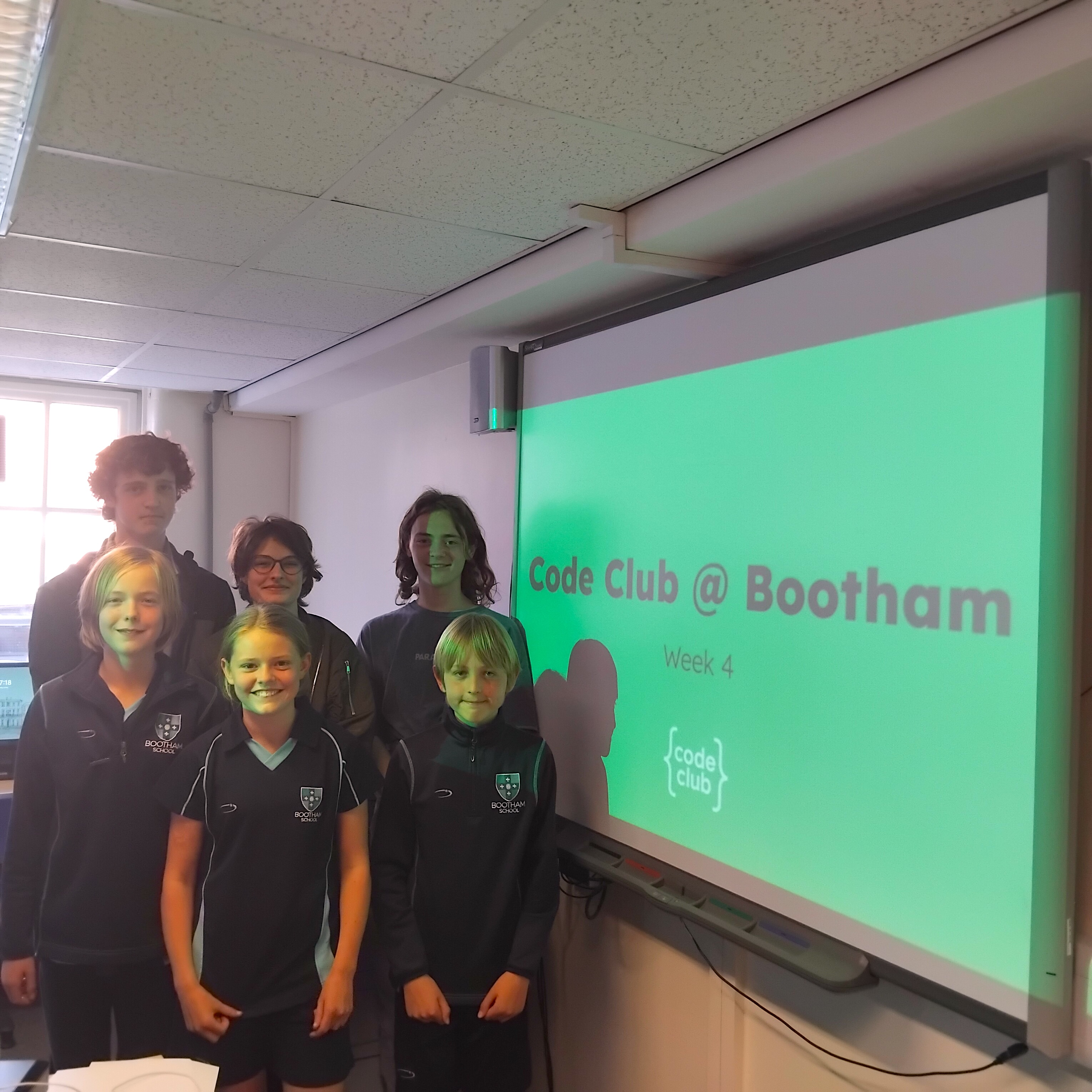
A group of six children and a mentor posing together in front of a projector screen displaying 'Code Club @ Bootham Week 4' in a classroom setting.

Depending on the project ideas I develop, there might be templates, instructions, or starter code. Sometimes, my themes align perfectly with Code Club projects, and sometimes we will use other projects. I always make sure creators know that if they don’t want to participate in the week’s theme, they’re free to work on any project they choose, allowing their curiosity and creativity to flourish.

During each session, I provide guidance as needed but strongly encourage problem-solving by the creators themselves or their peers. I also fully embrace the motto: “If you make it, then you can play it.” 

In the last 10 minutes of each session — each one runs for an hour — we celebrate each other’s achievements, and creators can show off their projects if they wish. I also hand out certificates from the Code Club resources page, and we applaud our creators. Finally, I ask them if they have any particular themes they’d like to explore the following week.

Two young participants of Code Club at Bootham School, holding a micro:bit project and a completion certificate, with a presentation screen in the background displaying 'Code Club @ Bootham Week 4'.

What makes your club thrive?

Our Code Club fosters a very relaxed environment where creators can explore whatever they wish, however they wish. This could mean following a tutorial, a Code Club project path, or even starting from scratch with their ideas.

Sometimes, if I feel a certain programming language, like Scratch, is being overused, and creators need a nudge to try something new, I’ll suggest we take a break from it for a bit. This encourages them to discover new technologies they might love, removing any fear or anxiety around trying different tools and keeping them curious and invested.

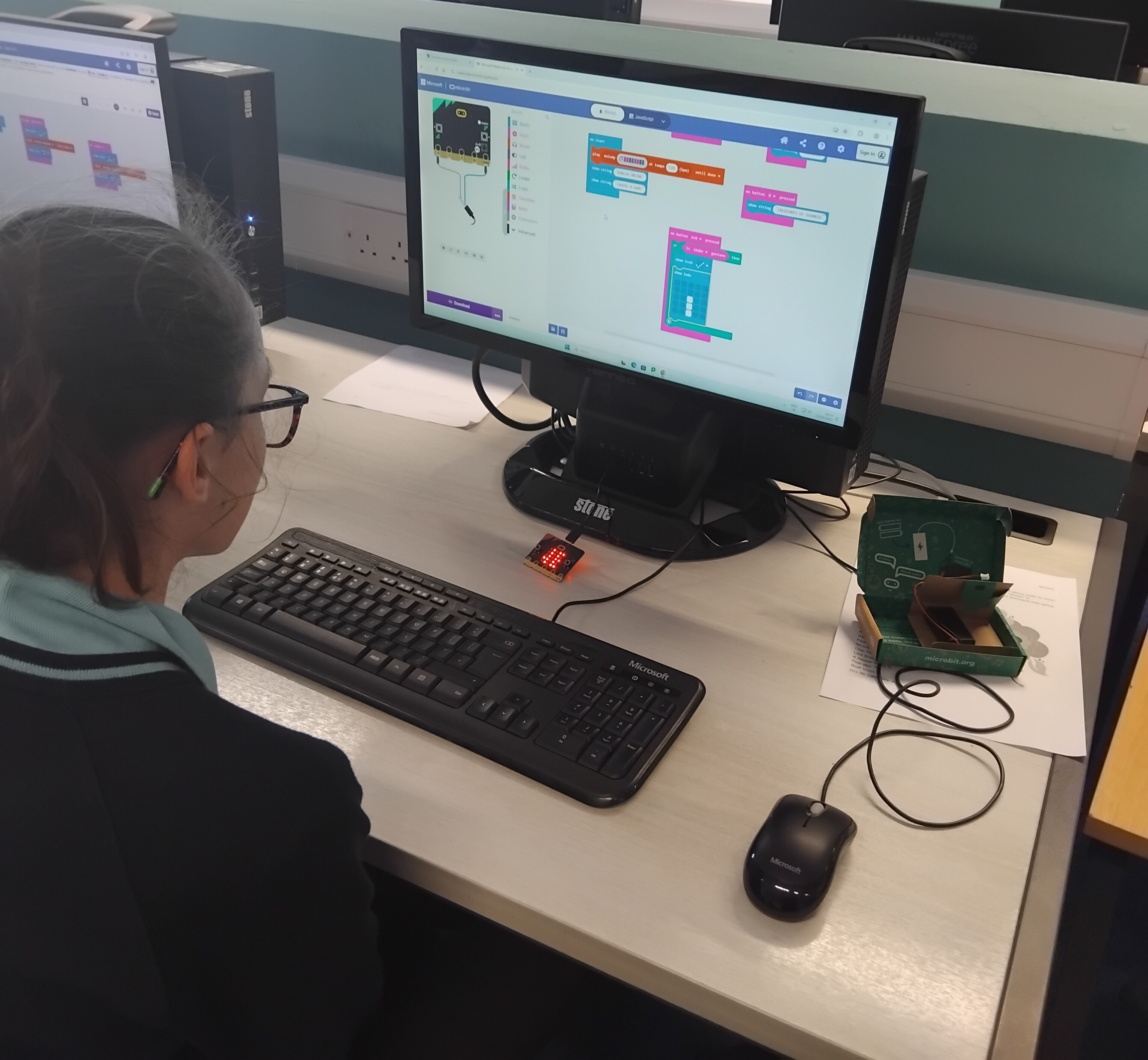
A student working on a coding project at a computer, using a programming interface with colorful blocks on the screen.

Because my Code Club is within a school and operates as an extracurricular activity, it’s built into students’ timetables. They pick an activity each term and stick with it. This has helped maintain continuity in creator skills and has even fostered young mentors who guide new students transitioning into Code Club.

Describe your club in three words

This is a tough one, but my three words would be: creative, ambitious, encouraging.

What advice would you give to someone starting a Code Club?

My biggest piece of advice is to use the resources that are available. The Code Club website has so many helpful tips, documents, and project ideas to get you started. You can also look for other nearby clubs and see if you can speak to their leaders or champions for advice. It’s always best to try, because if you don’t, you’ll never know what could be!

If Tom has inspired you to set up a Code Club in your community, explore our ‘Run a club’ page to learn how to get started.

Three words that say it all: Code Club creators sum up their experiences!

We often talk about the benefits of Code Club — the problem-solving, the creativity, and confidence building. But who better to tell you what Code Club is really like than the brilliant young creators who come here every week?

We asked a handful of Code Club creators from around the world to describe their experience in just three words. The answers were as diverse and exciting as their coding projects, giving us a glimpse into what makes Code Club special.

Here’s what they said:

Fabian, Barbican CoderDojo, London, UK

“Boundless, because it doesn’t have any boundaries. Creative because you can do anything and interesting because you can do all those things.”

A young boy sitting at a computer in a classroom setting, sharing his thoughts on Code Club with the quote 'Boundless, creative, and interesting'.

Jayantika, Bidkar Foundation Code Club, Pune, India

“I started as a creator and now I am a youth mentor for Code Club. What I love most is seeing children in rural areas grow confident in coding and problem-solving. It’s inspiring to watch them transform, knowing they’re gaining skills that can open doors to global opportunities.”

A young female mentor teaching coding to children in a classroom, with a focus on the quote 'Uplifting, rural, talent' highlighting the positive impact of Code Club.

McKinnely, Normandale Hills Elementary Code Club, Minnesota, USA 

“I like attending Code Club, because I get to meet with a bunch of kids in my grade and above my grade. So that’s the really fun part.”

Child wearing headphones smiling while sitting in front of a presentation screen with the Code Club logo.

What three words would you use to describe Code Club? Let us know on LinkedIn!