Where to start with Code Club projects

Starting a Code Club is exciting! There are hundreds of free projects to choose from, so where should you start?

The good news is that there isn’t one perfect first project. Every Code Club is different. The best project for your club depends on your young people, your setting, and what they enjoy creating.

To help you get started, we asked Code Club leaders from the community which projects they recommend for a first session — and why. Their advice shows there are lots of different ways to begin… and we noticed a few common themes.

Start with something that builds confidence

When we were speaking with the community, one thing came up again and again: choose a project that helps young people experience success quickly.

For Fiona from Peterborough CoderDojo in the UK, that project is Space talk, the first project from our Introduction to Scratch path.

“It introduces the basics of Scratch well and provides a useful framework for the first few sessions.”

What Fiona enjoys most is seeing how different young people connect with the same project.

“For some it’s the excitement of writing their first line of code. Others love choosing backgrounds and characters, while some enjoy adding sounds.”

Her biggest piece of advice:

“Don’t try to force a particular way through the project. Some young people will follow every step, while others will immediately start changing things. Let them take the project in the direction they want.”

Code Club mentor, Marc, suggests beginning with Rock band, the first project in another Scratch path: Module 1.

For him, Rock band is the perfect introduction because it assumes no previous coding knowledge, is easy to follow, and quickly becomes creative.

“It’s noisy, fun, and exciting — and the projects that follow work really well in sequence.”

Give young people choices

Code Club encourages young people to make choices, explore their own ideas, and shape their own projects.

Tamasin Greenough Graham prefers to offer three different projects with different levels of challenge, allowing young people to choose what interests them.

“Giving them a choice means they’re more likely to enjoy the session and stay engaged.”

One project she recommends is Stress ball. It’s simple enough for beginners but can easily be extended — everyone can work at their own pace.

“Young people end up creating completely different versions of the same project while sharing ideas and solving problems together.”

She also suggests choosing projects that connect with what’s happening around your club.

Whether it’s the changing seasons, a school or community event, or something your young people have recently experienced, making projects feel relevant can help keep enthusiasm high.

Personalisation matters

While each club leader had their own favourite first project, many said the same thing: the best projects are easy to personalise.

Richard from the UK recommends CATS! because it quickly shows what young people already know, while giving them lots of opportunities to make the project their own.

“Create your own version first to show what’s possible — change the character or colours, or add another level.”

Darren Townsend and Caroline Magero both recommend starting with Ghostbusters.

Darren likes Ghostbusters, along with Boat race, because they’re simple to get started with but easy to adapt and extend. He encourages club leaders to help young people think beyond the instructions by asking questions like:

  • Do the sprites have to be ghosts?
  • Could the sprites be falling fruit instead?
  • Does the game have to feature a boat?
  • Could the boat race become a car race instead?

Caroline, who runs a Code Club in Kenya, also recommends Ghostbusters because it introduces learners to a wide range of Scratch blocks while giving them the freedom to explore their own ideas and creativity.

Her advice is simple:

“Celebrate every complete and incomplete project to build learners’ confidence and encourage creativity.”

Together, their advice highlights that the best starter projects aren’t just easy to follow — they’re easy for young people to make their own.

These small changes help young people see coding as something creative rather than something they have to copy exactly.

Creativity is more important than perfection

Several Code Club leaders told us that they encourage young people to experiment, rather than produce a perfect project.

James Obukui, from Kenya, recommends Lost in space because it introduces key coding concepts while leaving lots of room for imagination.

“Watching projects come to life excites learners. They enjoy adding more sprites, changing the code, and making the project their own.”

He also reminds leaders to create an inclusive environment where everyone has the opportunity to explore at their own pace.

Physical computing can be a great first experience

Not every Code Club starts with Scratch.

Japhet Kipkore from Kenya introduces new learners to physical computing by starting with Lighting the LEDs using a Raspberry Pi Pico.

He likes the project because learners can immediately see the results of their code while learning about electronics.

“Always start with simple demonstrations and let learners work in pairs or small groups. Give them opportunities to try things for themselves.”

A few themes we noticed

Although everyone had their own favourite project, there were some clear patterns!

Many Code Club leaders recommend projects that:

  • Build confidence through quick successes
  • Can be personalised and extended
  • Give young people choices wherever possible
  • Match learners’ interests instead of focusing on difficulty

Perhaps the biggest takeaway is that the project itself matters less than the experience it creates.

Still not sure where to begin?

If you’re still deciding, here are a few ideas.

If your creators are complete beginners… Space talk

Also recommended by Fiona from Peterborough CoderDojo, UK, Space talk is a gentle first step into Scratch, where creators build a space scene and bring alien characters to life by making them react with sounds and expressions when clicked. It’s a great intro because it only uses a couple of simple code blocks (Looks and Sound), while still letting learners get creative with the Paint editor to customise their characters. It’s perfect for anyone who’s never coded before.

If they love games… Neil the seal

This is a chaotic, fun, arcade-style game where creators code Neil the seal to waddle around town smashing signs, cars, and barriers for points, while a ranger tries to chase him back to the sea. It’s got real game mechanics: scoring, movement, and a chase opponent, making it a satisfying, silly game to build and play. And stay tuned — six new Games projects are coming soon!

If they enjoy art and design… Paint box

Creators build their own working paint program in Scratch, complete with a pencil, colour changer, and eraser. It’s a lovely blend of coding and creativity. They’ll learn how mouse input and drawing tools work under the hood, while ending up with a genuinely useful app they can doodle with afterwards.

If they like storytelling… This is our flatgame

This is a lovely hybrid of video games and poetry, where creators hand-draw or craft their own artwork (drawings, cut-outs, photos), then bring it into Scratch to create a game world they can explore by wandering around. It’s especially great for creative, non-linear storytellers, since there’s no ‘winning’ — just atmosphere and exploration. A nice change of pace from traditional coding projects.

If they want to make something physical… LED firefly

Using a Raspberry Pi Pico, creators wire up an LED and switch, then program the LED in MicroPython to blink in a pattern that mimics a real firefly. It’s a lovely first hardware project. Creators will learn the basics of microcontrollers, circuits, and physical computing, and end up with a little glowing creation they built with their own hands. 
There’s no perfect first project

Every Code Club is different. A project that works brilliantly in one club might not be the best fit for another.

The most important thing is choosing something that gets young people excited to create, explore, and come back next week.

As Fiona reminds us, don’t worry if everyone approaches a project differently. Some young people will carefully follow every step, while others will immediately start experimenting.

All will be learning in their own way.

Browse Code Club projects →

Understanding what young people learn in Code Club: Early themes from our Insights project

We want every young person at Code Club to be able to build their skills, feel confident using technology, and have fun. To make sure our activities meet the needs of both clubs and creators, we constantly review what we’re doing, gather evidence about what works, look at the latest research, and ask ourselves questions like, “What are young people learning in Code Club?” 

For example, we closely studied the independent evaluation of Code Club’s impact carried out by researchers at Durham University. They looked at how Code Club affects young people’s attitudes towards learning, how they feel about coding, and their progress in coding.  

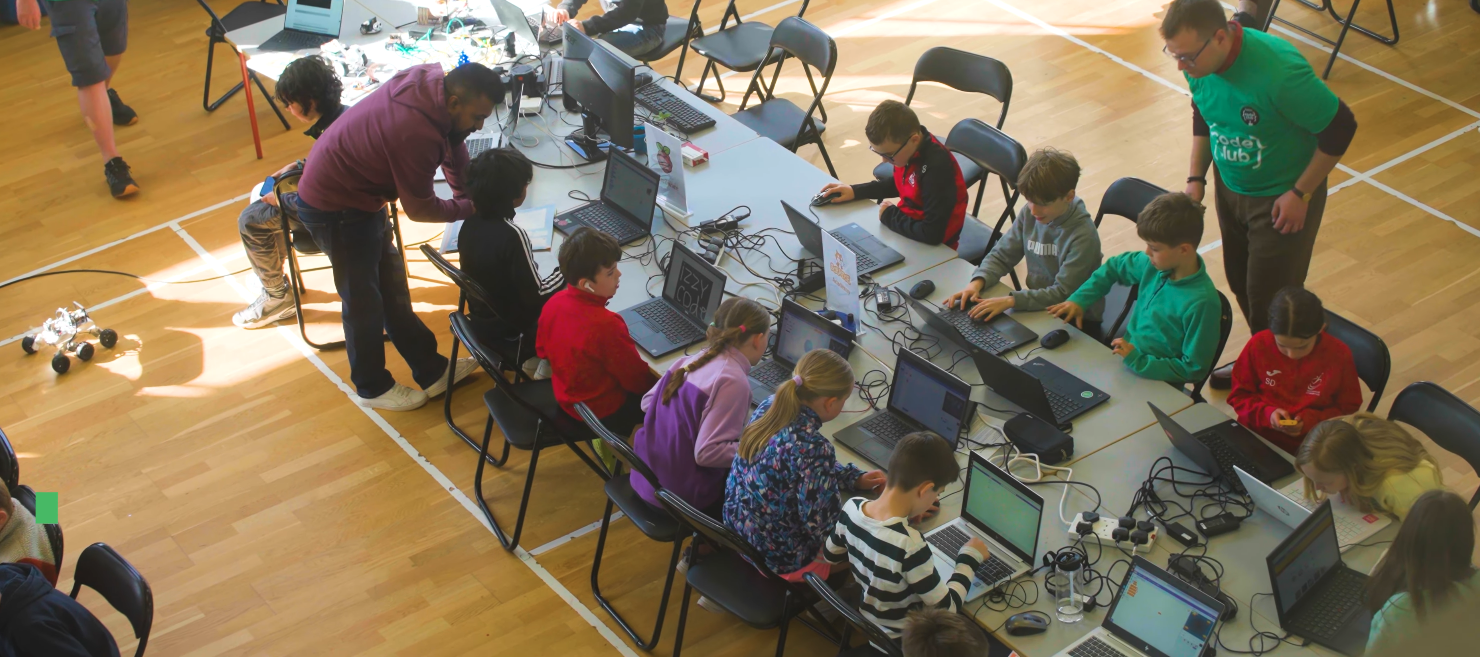
A group of children and adults engaged in a tech workshop, working on laptops at a long table in a spacious room. Some children are programming while others are interacting with electronic devices.

To build on this research, we recently launched the Insights pilot project to explore two questions in more depth: 

  1. What do young people learn in Code Club?
  2. How do clubs use Code Club projects to support learning?

Thanks to the clubs, mentors, and young people who took part, we’re starting to gain new insights into the skills, confidence, creativity, and sense of belonging that young people develop through Code Club.

Who took part and what did they do?

Code Clubs from seven countries participated in the project, these were the UK, South Africa, Italy, the United States, Canada, Ireland, and Albania.

In total:

  • 91 clubs completed mentor surveys
  • 502 young people completed baseline surveys
  • 105 young people completed endline surveys
  • 79 young people completed both surveys, allowing us to look at changes over time

Although fewer clubs completed the endline survey than we had hoped, the project still generated a rich dataset about young people’s experience in Code Clubs.

What are young people learning?

One of the most encouraging findings is that young people reported high levels of interest and confidence in coding.

Across the participating clubs, young people reported:

  • Strong interest in coding (8.4 out of 10 on average)
  • High levels of belonging, with many feeling that they know other people who are interested in coding (8.7 out of 10)
  • Positive levels of creative thinking (7.9 out of 10)
  • Good communication and problem-solving skills

Learning over time

While the number of matched responses was too small to draw firm conclusions, the findings suggest that Code Club is helping young people develop interest in coding. 

We also saw some interesting differences between groups, although our sample size was small. For example, male creators reported increased problem-solving skills over time, while female creators and those who preferred not to give their gender showed increased confidence in learning coding independently.

What do Code Clubs look like?

One of the most interesting findings from the project is just how varied Code Clubs are.

Some clubs focus primarily on one technology, such as Scratch, while others regularly use a range of technologies including Python, web development, robotics, microcontrollers, and physical computing.

Clubs also vary in how projects are chosen:

  • Some are largely mentor-led
  • Some give creators complete freedom to choose their own projects
  • Others use a mixture of both approaches

Despite these differences, mentors expressed remarkably similar values and motivations in relation to their clubs. While clubs differed in their form and delivery, they were united by a shared ethos centred on encouraging creativity and developing soft skills alongside coding skills.

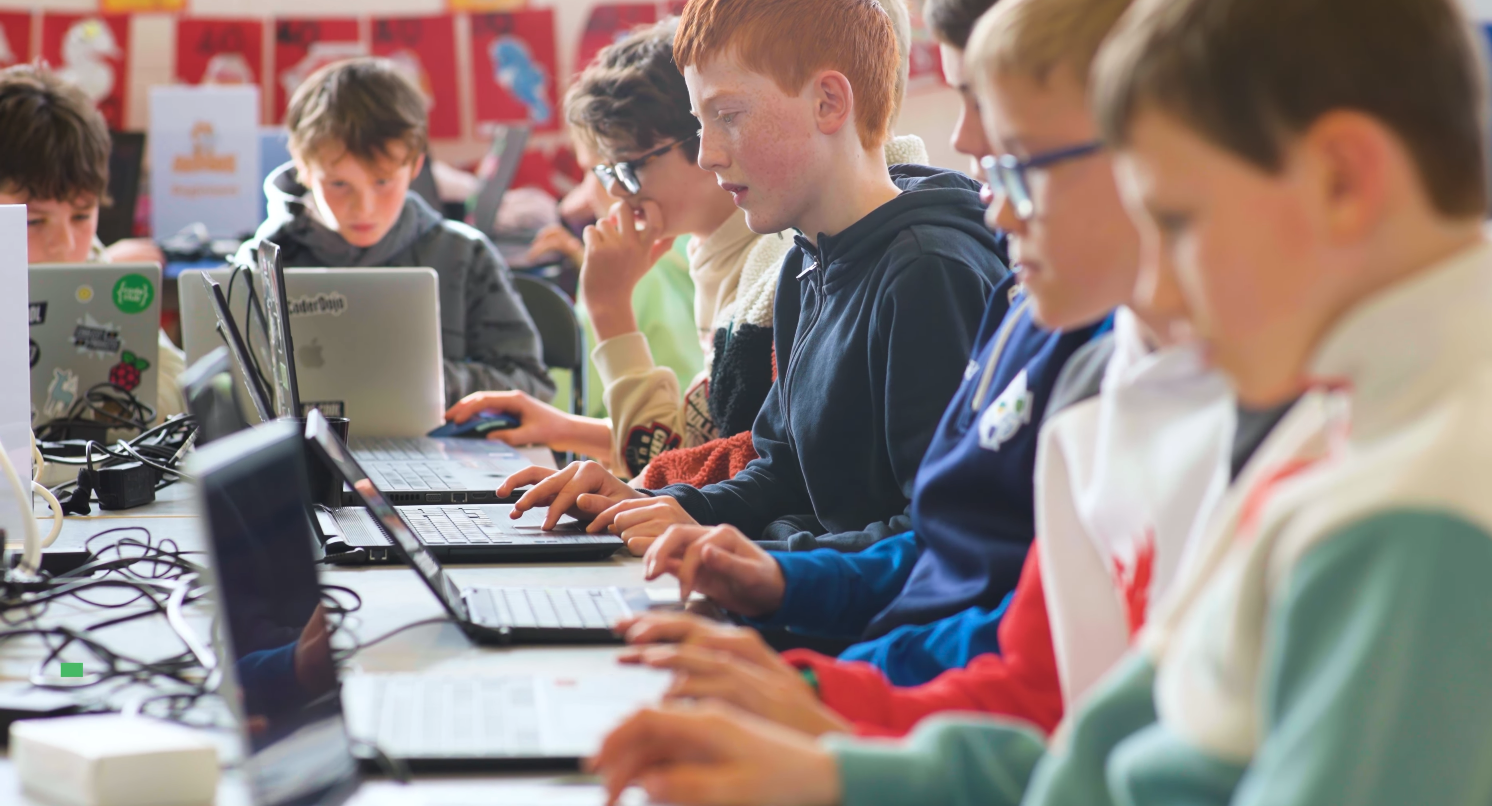
A group of children focused on coding on laptops during a workshop or class.

How are clubs using Code Club projects?

The project also helped us better understand how mentors use Code Club projects. We found that clubs use projects in many different ways, for example:

  • Following projects independently on screen
  • Working through projects together as a group
  • Using printed project guides
  • Combining Code Club projects with their own activities and resources

Many clubs reported using printed resources, highlighting the importance of making projects accessible in different formats.

The data also suggests that clubs making regular use of Code Club projects report higher average scores across a range of outcomes, including problem solving, creative thinking, communication, interest in coding, and confidence. However, further research is needed to understand exactly what factors contribute most strongly to these outcomes.

What else makes a great Code Club experience?

The mentor surveys revealed several common features across clubs. Many mentors reported regularly using:

  • Peer learning and collaboration
  • Creator recognition and celebration
  • Club rules and positive behaviour expectations
  • Opportunities for young people to support each other

Mentors also described activities such as icebreakers, show-and-tell sessions, youth mentoring, and opportunities for young people to share their projects with others.

These approaches may play an important role in helping young people build confidence, creativity, communication skills, and a sense of belonging.

What have we learned from the pilot?

Perhaps the biggest learning from this project is that Code Clubs are incredibly diverse, but they share a common commitment to helping young people learn, create, and grow.

The pilot also helped us:

  • Develop new ways of understanding different types of Code Clubs
  • Test tools for measuring learning outcomes
  • Gather evidence about how young people experience Code Club
  • Identify improvements for future evaluation work

While the study was not able to conclusively demonstrate learning gains over time due to low endline participation, it provided strong foundations for future research and highlighted several promising areas for further investigation.

A woman with long, braided hair is engaging in conversation with a young girl, who is attentively listening. They are seated at a table with a laptop in front of them, in a room decorated with framed pictures.

What’s next?

This is just the beginning.

We’ll be using what we’ve learned to improve our evaluation tools, better understand the different ways clubs operate, and continue exploring how Code Club supports young people’s learning.

Future work will include looking at project data from the Code Editor, gathering more feedback from young people, and finding new ways to make participation easier for clubs.

If you are interested in taking part in future Code Club research, please let us know

Thank you!

A huge thank you to every mentor, creator, partner, and club that contributed to the Code Club Insights pilot.

Your participation has helped us learn more about the amazing work happening in Code Clubs around the world and will help shape the future of Code Club for years to come.

“I was terrified of Python!” – How Harry became a Code Club youth mentor

Every Thursday after school, the Code Club at Dame Allan’s Schools, Newcastle upon Tyne, England, becomes a space where young people can experiment, solve problems, and learn together. But for 14-year-old Harry, it’s also become an opportunity to lead, teach, and inspire others.

Harry first joined Code Club in Year 7 with some experience of Scratch and a love of “all sorts of computer-y things”. Over the years, he explored everything from Sonic Pi and web design to AI and machine learning. But one challenge stood out.

“The worst part for me was when we were introduced to Python,” Harry says. “I was so scared of text-based coding! I ended up learning it and it went OK!”

Now, just a few years later, Harry is leading sessions and supporting creators to learn Python as a Code Club youth mentor.

A student is standing in front of a large touchscreen display, writing code for a simple choice adventure game. The screen shows a Python code snippet with instructions for the game, including a welcome message and player choices. The student is wearing a blue sports outfit and appears engaged in the lesson.

Taking the leap into mentoring

Harry’s journey into mentoring started when he spoke to Code Club leader and computer science teacher, June Raines, about staying involved as he got older.

“She suggested that I could help out a bit as well,” Harry explains. “I thought it sounded quite fun, so I decided to give it a go and use it for my Duke of Edinburgh volunteering too.”

What began as helping other members soon developed into planning activities and running sessions.

“When I first started helping, I felt a little useless and that I wasn’t helping enough,” he says. “That inspired me to actually run my own sessions!”

Today, Harry helps lead the club every week, teaching coding concepts, supporting creators when they get stuck, and making sure sessions stay fun and engaging.

A student working on a computer screen displaying a Python programming interface with various project suggestions, including a password generator.

Building a club shaped by young people

A typical session starts with a quick game before creators dive into projects and activities. Harry regularly asks club members for feedback through surveys, which helps him shape future sessions around what they enjoy most.

“I try to tailor the sessions to what they like,” he says. “That helps keep it fun and engaging for them.”

One of Harry’s favourite things to teach has been Python — the same language that once felt intimidating to him.

“Some of my best sessions were probably when I taught them Python!”

For Harry, the most rewarding moments come from seeing younger creators grow in confidence.

“The best moment was when a new creator finally got his rock, paper, scissors game working,” he says. “I was so happy for him!”

Illustration of a computer screen displaying a pink brain at the center, with hands representing 'rock' and 'scissors' on either side and thought bubbles for creative ideas.

A Star Club success

This year, Dame Allan’s was recognised as a Star Club — a group of amazing clubs that help Code Club and its community grow and develop. They show what it takes to run a successful club, from sharing their knowledge to helping us test new projects. 

“It felt great!” Harry says. “To know that the Raspberry Pi Foundation recognised our club as an amazing example of their Code Clubs was really nice.”

June believes Harry has played an important role in creating the club’s relaxed and supportive atmosphere.

“The students really enjoy having Harry lead the club,” she says. “They see it as less of a lesson and more of a collaborative coding session.”

Looking ahead

Harry already has plans for the future. He hopes to continue leading coding activities at school and is currently learning Dart and Flutter (Dart is the programming language, and Flutter is the toolkit that helps turn that code into apps) in his own time. He’s also keen to introduce new technologies and projects to future Code Club members.

His advice for other young people thinking about becoming a Youth Mentor?

“Give it a go! What’s the worst thing that could happen?”

From being nervous about Python to teaching it himself, Harry’s story shows how Code Club can help young people develop not just coding skills, but confidence, leadership, and the chance to help others discover a love of technology too.

A student in a school uniform using a power drill to assemble a robotics project, focused on the task at hand.

For a little more support, or if you’re open to mentoring others, you can also join a Code Club. Check our website to find a club near you and become part of a like-minded and welcoming community.