Our Code Club rules! How to have fun and set boundaries

Creating guidelines for your Code Club can be a simple way to help your young coders make the most of the non-formal environment that Code Club offers. In this blog, we share a few ideas to help you get started.

Code Clubs are fun, creative, and at times wonderfully chaotic spaces. If you’re a teacher running a club at your school, it’s not always easy to transition from the role you take during class time, to a club leader hosting a more relaxed space. If you are a Code Club volunteer, there can also be challenges with entering a school as a new and unfamiliar face.

A classroom setting with young people sat at tables working on laptops.
Melbourn Code Club

Club leader Janine Kirk at the King’s Academy in Stoke-on-Trent shared how the informal element of Code Club has changed the learning experience for both her and her students:

“In classrooms it’s often quite structured, whereas in Code Club I can be a little bit more free and they can get to know me. We can have a bit of a joke – the students really enjoy that!”

Code Clubs should be less structured than the school day, but encouraging an atmosphere where everyone takes care of themselves, club equipment, and each other can help turn a good Code Club into a great one! One way to do this is to get your young coders to come up with a set of club rules with you. This helps create a Code Club that everyone can enjoy, whilst providing boundaries that keep your club safe, happy, and fun.

Create your club rules together

At the start of your Code Club journey, you’ll need to spend some time figuring out how best to run your club and then you can fine tune the details as you go. Involving your young coders in creating your club guidelines is a simple icebreaker activity, and being involved in the process can provide them with a sense of ownership and expectation around their behaviour.
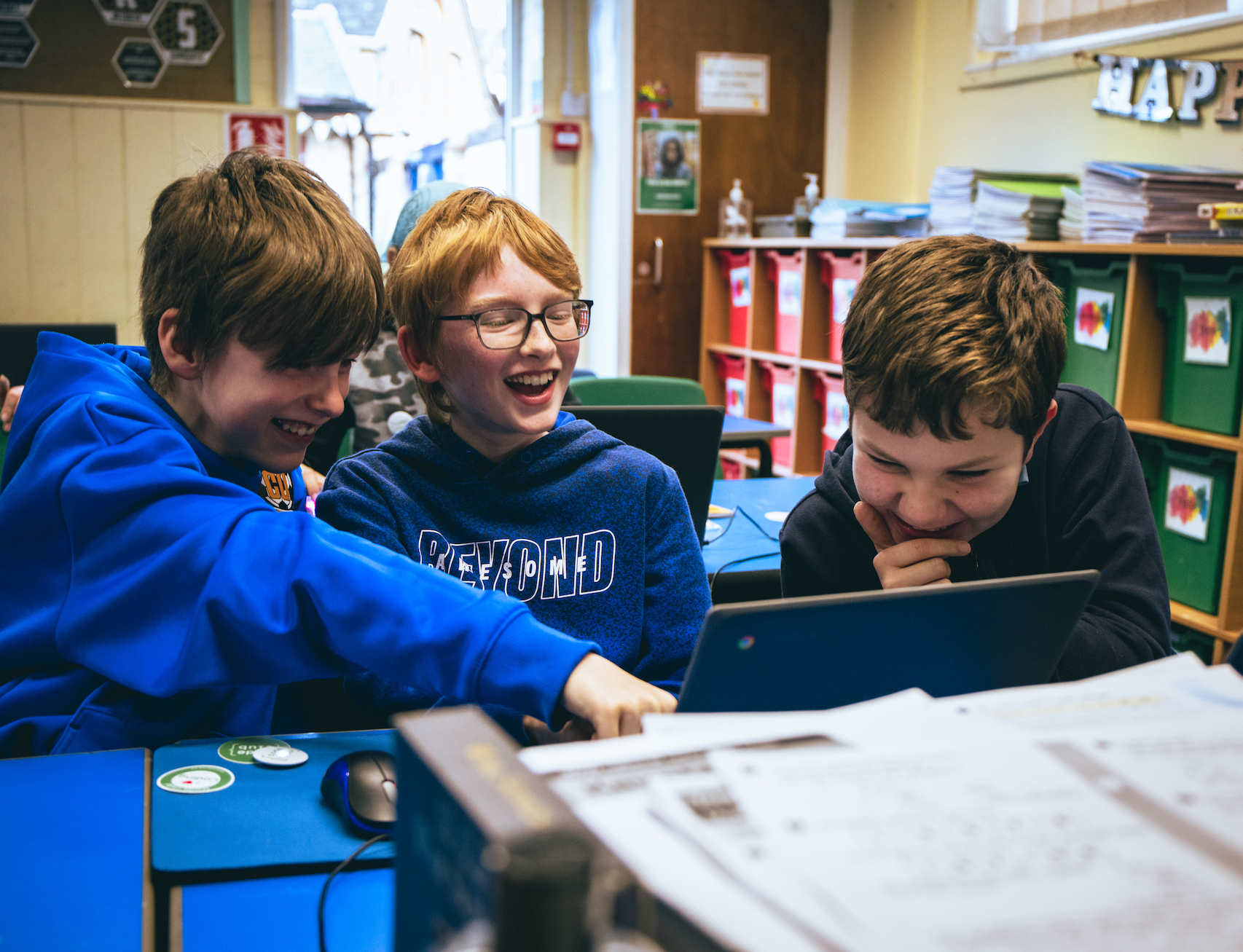
Three boys in a classroom gathered around one laptop, laughing.
Working together to set club rules

Spend ten minutes during your first session discussing how your Code Club should run, with club attendees giving their ideas on how to make that vision a reality. Right from the start, you can use this as a chance to model expected behaviours: for example, should your club members raise their hands to share an answer, or are you happy for them to call out ideas?

Once you’ve decided on your final list, you can write them up using the “Our Code Club rules” template in your dashboard, or you could ask your club members to design their own reminders of the rules using paper and coloured pens or pencils.

Club rules template. Be kind, Listen to other, Have fun.
Club rules template

All ideas are welcome!

It’s up to you to choose ideas that will let your coders and Code Club thrive. Code Clubs should be fun and safe spaces, so your club rules could cover anything from behaviours that encourage exploration and imagination, to requests outlining how everyone should set up and pack away equipment each week.

If you need some inspiration to get started, here are a few ideas you could suggest:

  • Be kind, respectful, and treat others the way you would like to be treated.
  • During Code Club sessions, you can call the Club Leader by their first name. 
  • If someone is talking, make sure to listen. It’s okay to chat to each other during Code Club, but we listen quietly when someone is speaking.  
  • We use the moto ‘Ask three, then me‘ to encourage young people to try self-help strategies before asking a mentor. Encourage creators to:
    • 1. Ask themselves (test the code and try and find the error) 
    • 2. Ask their peers
    • 3. Ask a search engine
    • 4. If they still need help, ask a mentor
  • Be mindful of your behaviour online. Don’t share any personal information about yourself and follow any guidance shared. 
  • Take care of the equipment. Don’t eat or drink near computers, and put everything away neatly at the end of the session. 
  • Have fun and be creative! Enjoy learning new things and don’t be afraid to let your imagination run wild!   

What rules will you include in your Code Club? Let us know on social media using the hashtag #MyCodeClub

Our survey says…A look at the results 

The summer is an exciting time for us at Code Club as we receive the results from our Annual Survey and we learn about your club and your opinion of Code Club. 

Thank you to everyone who filled in the survey; your responses were insightful. Read on for a closer look at the highlights and most significant findings that we’ve uncovered.

Children sat at desks in a classroom looking at laptops.
Melbourn Code Club

Where and who: getting to know clubs and their leaders

We’re interested in building a picture of what clubs look like, where in the world they run, and who participates in them. 

First, we found that there’s a real global mix: 69% of responses were from clubs in the UK, but we also heard from clubs from 31 other countries, from Afghanistan to Canada!  

You told us that being part of our global community is important to you: 77% of you reported that you find being part of the community motivating, and 81% of you have found that community beneficial for answering questions and solving problems.

Next, we found that just over 50% of responses were from school educators and the rest were from volunteers who go into their local school or library to run their club. Over half (53%) of club leaders identify as female and we were pleased to discover that, again, the proportion of Code Club members who identify as female has increased, to 42%. This is fantastic and we’re very proud of this achievement.

If you’re interested in engaging with fellow club leaders from around the world, consider joining our community on X (formerly Twitter), Facebook, and LinkedIn. Share your questions and success stories to connect and interact with like-minded individuals.

The impact of Code Club

We were overjoyed to hear about the positive impacts that coming to Code Club has on your young learners: 94% of you told us that you saw positive changes in club members’ personal confidence. You also reported that attending Code Club helps your learners: 

  • Increase independence in their learning (91%) 
  • Develop their creative thinking (90%)
  • See the usefulness of computing (90%)
  • Increase their feeling of belonging (81%) 

We also discovered that, when thinking about digital technologies:

  • 94% of you agreed that club members’ skills in computing and programming had increased
  • 93% agreed that your club members’ confidence in learning about computing and programming had increased
  • 92% agreed that your club members’ interest in computing had increased
  • 87% agreed that club members’ ability to solve problems with computers had increased

Why do schools run a Code Club?

We asked educators about how their school benefits from running a Code Club and discovered that 84% valued the increase in visibility of computer science in their school and 61% valued the contribution to a broad extra curricular programme.

What happens at Code Club sessions?

We were not surprised to find out that the majority of clubs (95%) use Scratch in their sessions, but we were pleased to hear that you have been also working with Micro:bits (58%), Python (47%), and HTML/CSS (30%).

We heard a lot of love for our projects, with 81% of clubs using them mostly or exclusively. You told us that you found them easy to follow, and liked the layout:

“[We find the]..clear coloured blocks and guidance tips useful. The use of expandable information windows is good as it saves scrolling back and forth.”

How can we support you?

This is one of the most important questions that we asked you. We want to help you run fun, successful clubs, and are keen to hear your ideas for how we can support you further. 

We found that 75% of you have participated in training offered by the Raspberry Pi Foundation. This includes our Code Club online workshops, the ‘Prepare to run a Code Club‘ course, and any of the courses provided by the Raspberry Pi Foundation on the global online learning platform edX.

We’ve had some excellent feedback and ideas about how we could do more to help, and we’re going to work on a few of these suggestions in the next couple of months. Watch this space!

We always enjoy hearing your ideas on how we can assist you in running your Code Club. If you missed the survey but have an idea about how we can support you, please reach out to the team by emailing us at support@codeclub.org.

Digital literacy and computing in India

In today’s world, digital literacy and computing skills are essential, and serve as a gateway to coding and computational thinking. In India, there is a pressing need to bridge the gap in ICT skills among youth.

According to the National Sample Survey Office (NSSO) report for 2020-21, only a small percentage of young people possess the ability to write computer programs using specialised programming languages.

Recognising this challenge, the third National Education Policy of India, launched in 2020, emphasised the integration of digital literacy, coding, and computational thinking into the curriculum starting from grade 6. There is now a growing acceptance of computing programs for children, like extracurricular or after-school activities in the form of Code Clubs, in the school as well as community.

Four girls looking at two computer screens working on Scratch projects.

History of Code Clubs in India

The Raspberry Pi Foundation had also recognised the need for young people to access ways to learn computing skills, so work in India started in 2018 with one team member, Divya Joseph running the show. By the end of that year, there were 150+ Code Clubs across the country through partnerships and volunteers. In 2019, our team expanded when Vasu joined — and from then, we have never looked back! We partnered with Pratham Foundation and the number of Code Clubs went up to 350+.

The pandemic was a difficult time for most of our clubs — learners and supporters alike. The engagement then was continued through online hackathons and community calls.

In 2022, our team grew to six people, and we started teacher training and registering Code Clubs based in government high schools of Odisha — one of the eastern states. We presently have over 1,100 active Code Clubs.

Learning through the years

While Code Clubs typically run in schools, we realised that the model in India was going to be a unique one. Organisations like Pratham Education Foundation work with out-of-school children and facilitate learning in community centres based in remote villages. Their needs are completely different from what we have experienced before. 

A rural building in India, painted blue with Code Club posters hanging outside.

Fostering a warm and supportive environment for both teachers and students is at the heart of Code Club’s mission. We reached out to the community to understand their situation better because we knew we had to adapt quickly to cater to our community’s needs. 

One such community-focused initiative is “Coding Pe Charcha,” a voluntary session conducted every Friday. The phrase “Coding Pe Charcha” translates to “Discussions over Coding.” Conducted entirely in the local language, Odia, this session is specifically designed for teachers who have been trained and assisted in setting up Code Clubs in government high schools.

To have teachers voluntarily join these sessions week after week, despite their non-computing background and other ground level challenges, points to genuine interest in the area of computing. Interacting with these teachers also enlightens us to their specific support needs — from very basic digital literacy skills, like changing passwords and getting over infrastructural challenges, to using resources which come in English and are prepared for a global audience.

Another community-driven initiative is the “Come together to Learn together” (CTLT) calls. Code Club has always prioritised community engagement, regularly organising quarterly meetups and workshops for community members, some of which are led by the community itself. These gatherings feature panel discussions centred around a chosen theme relevant to their current needs.

Topics have ranged from “Computational Thinking through Offline Activities” to “Introduction to Raspberry Pi Pico.” These calls have consistently attracted approximately 120+ participants, actively involving community members and placing them at the heart of Code Club’s work.

A screenshot of some code being shown as part of a webinar.

Impact of Code Clubs

The impact of Code Clubs in India has been substantial and transformative. Through partnerships with organisations like Mo School Abhiyan (Odisha government) at the school level and Pratham Foundation at the community level, Code Clubs have reached over 32,000 students in high schools across Odisha, with an impressive 54% of them being girls. These Code Clubs serve as a crucial first step for many students in their digital learning journey. 

Suchitra Bhuyan, a Code Club teacher from Brundavan Govt. High School in Jagatsinghpur, Odisha, shares her experience saying, “When I work on coding with my students, I myself feel like a student. Sometimes I learn from them, and sometimes they learn from me. So we, the teachers and students, learn together and create together. When we succeed in creating something, the happiness on their faces is truly heart-touching.”

Five women standing in a row with their thumbs up. Behind them is a screen showing Scratch.

What next?

Looking ahead, Code Club’s focus remains on engaging and supporting existing clubs, partners, volunteers, and teachers. While coding education in India is still in its early stages, particularly among disadvantaged groups, Code Club is determined to expand its reach and empower more children with digital literacy and computing skills. By fostering a warm, community-centric approach and placing the people behind the impact at the forefront, Code Club continues to make a difference in the lives of countless young learners across India.

Through some inspiring people on the ground running these Code Clubs, we are trying to build a community of coding learners and supporters. Do you wish to support us in any of the already running Code Clubs? Do you wish to start a Code Club in your community? Reach out to us at: india@raspberrypi.org