Top tips for running a thriving Code Club

By volunteering your time to lead a Code Club, you’re empowering young creators to develop the skills they need to shape a future they’re excited about. To do this, you need to provide an environment where the young people feel comfortable exploring, experimenting, and learning through coding. 

Every Code Club runs differently and there is no set formula for what makes a great Code Club. Nevertheless, to offer some guidance, we’ve brought together ten tried-and-tested strategies used in Code Clubs around the world that support creators as they learn, play, and make.

An adult and boy facing a laptop smiling.
Volunteering at a Code Club

1. Start small and grow gradually

Begin with a small group of creators while you establish the club’s routines. This allows you to be more focused and helps you understand the group’s dynamics. As you gain confidence, gradually increase the number of members. You can also grow your mentor team to support even more creators.

2. Be prepared

Prepare for how you want your Code Club to run. This will look different for every club. For some of you, it will involve familiarising yourself with the projects and resources (including the software or hardware) that the group plans to use. Others will run their clubs with  looser frameworks and make project decisions on the day. 

3. Show, don’t just tell

If your creators all work on the same project, consider starting each session by showing a completed version (or versions) of the project and suggesting different adaptations that can be made. This gives young people a clear target and sparks their motivation to create their own unique projects.

4. Embrace experimentation

Don’t expect creators to follow the projects exactly. Learning happens through experimentation. Allow room for creativity and encourage creators to put their own personalities into their projects.

A classroom with girls sat a tables working on laptops.
Encourage experimentation and collaboration

5. Go digital

Save paper by using Code Club projects online. Creators will quickly adapt to navigating between browser tabs, and you’ll contribute to a more sustainable Code Club.

6. Encourage collaboration

Try paired programming — having creators work together on projects can boost concentration, teamwork, and problem-solving skills. This is particularly useful in settings where there might not be a computer available to each club member.

7. Foster problem-solving

Resist the urge to immediately fix creators’ mistakes. Keep your hands off the mouse and keyboard. Instead, gently point them in the right direction and let them discover and correct errors themselves. You can do this by asking creators questions and directing them to find the solution. This develops their critical thinking and resilience.

A girl working at a desktop computer with adults behind looking at her screen.
Foster problem-solving in your Code Club

8. Celebrate achievements

Plan show-and-tell sessions at the end of each session if time allows, or two to three times a year to offer a space for creators to showcase their projects and feel proud of their accomplishments.

9. Recognise success

Certificates can act as a great motivator. Explore and download our range of certificates and award them to creators when they hit milestones. 

10. Connect with your peers

Join an online ‘Coffee and conversation’ meet-up to interact with fellow club leaders and mentors. It’s a great space to share ideas, gain valuable insights, and ask questions. 

Looking for more inspiration on running your Code Club? Explore how you can create one club for all by working together to set your own rules! 

The Future is bright: Why should young people learn to code?

When we talk about coding and digital making, the question ‘why should young people learn to code?’ will often come up in the conversation. It’s a great question with lots of interesting answers. Let’s dig deeper!

A Code Club in York, England.

There’s no doubt that there is a buzz about the future of technology and where this fast-paced digital era will take us. The demand for computer science and coding expertise is already at unprecedented levels. While much remains unknown about this shifting landscape, we know this for sure: coding skills will empower young people to meet the challenges of their future.

With Code Clubs in over 100 countries, one of the things that binds us together as a community is that we all see the benefit in young people learning to code. So we’ve asked four colleagues from our global team to reflect on this topic. This is what they said…

Giving young people agency

Equipping young people with the tools, knowledge, and skills to code enables them to develop a sense of purpose within their community and address real-world problems that are important to them. We love to see how young people begin harnessing these skills through the use of problem solving, resilience, and collaboration during Code Clubs that we visit.

On this, Sofia Mohammed, Executive Director, USA, said:

“Learning to create and solve problems with digital technologies is important for young people, especially those from historically disadvantaged communities, because digital skills can lead to high-paying jobs in technology and other areas. This can help break the cycle of poverty and marginalisation in their communities. Knowing how to use technology can also help young people stand up against social injustices, support their communities, and fight for their rights.”

Five people stood in a garden, holding paintings of the sunset.
Sofia with members of the USA team


Our Country Director in India, Anuj Alphonson, contributed his thoughts:

“Young people should learn to create with digital technologies to drive innovation and adapt to an ever-evolving world. By learning to create and solve problems with these tools, they gain essential skills for the future such as critical thinking and resilience in a tech-driven society, which prepares them for diverse career opportunities and challenges.”

Six people standing in a line behind a wall mural.
Anuj and the team in India

Future opportunities

Learning to code opens doors to a world of exciting career possibilities for young people. It’s not just about becoming a software developer; coding skills are increasingly valuable in fields like design, marketing, science, and even the arts.

Attending Code Club teaches young people problem solving, critical thinking, and creativity — vital skills for any career path. Whether a Code Club member dreams of creating the next big app, designing stunning websites, or analysing data to solve global challenges, coding gives them the tools to turn their passions into fulfilling and successful careers.

We have a couple of new faces around here, so we’d like to introduce our new Community Coordinator in the Code Club team, Yuki Hazlewood. She said:

“It’s so exciting to see what young people can dream up and create through digital making. And there’s no doubt that learning to code opens a world of opportunities for young people’s career paths. Computing careers are seeing double the growth rate of other industries, so it’s truly a new frontier that we should be preparing them for.”

Yuk and Rachel stood behind a table. On the table are boxes and screwdriver's, in the background is shelving with boxes on.
Rachel and Yuki in the Maker Space

We asked Rachel Arthur, our new Chief Learning Officer at the Raspberry Pi Foundation, to wrap things up. She shared that:

“Everyone should have the chance to shape the world around them. Learning these skills gives young people the tools to create and solve problems using technology. Digital technology is also everywhere, and it’s changing fast. Learning these skills helps young people keep up and take an active part in this exciting world.”

Thank you to Sofia, Anuj, Rachel, and Yuki!

Are you ready to spark a passion for coding in your community? Start a Code Club today!

Behind the scenes of Code Club: Stories and highlights from the team

As another amazing Code Club academic year comes to a close for many clubs across the globe, we’re taking a moment to celebrate the incredible achievements, growth, and fun we’ve shared over the past 12 months.

Our dedicated team has been hard at work supporting clubs across the globe, and we’re thrilled to share some of their highlights with you!

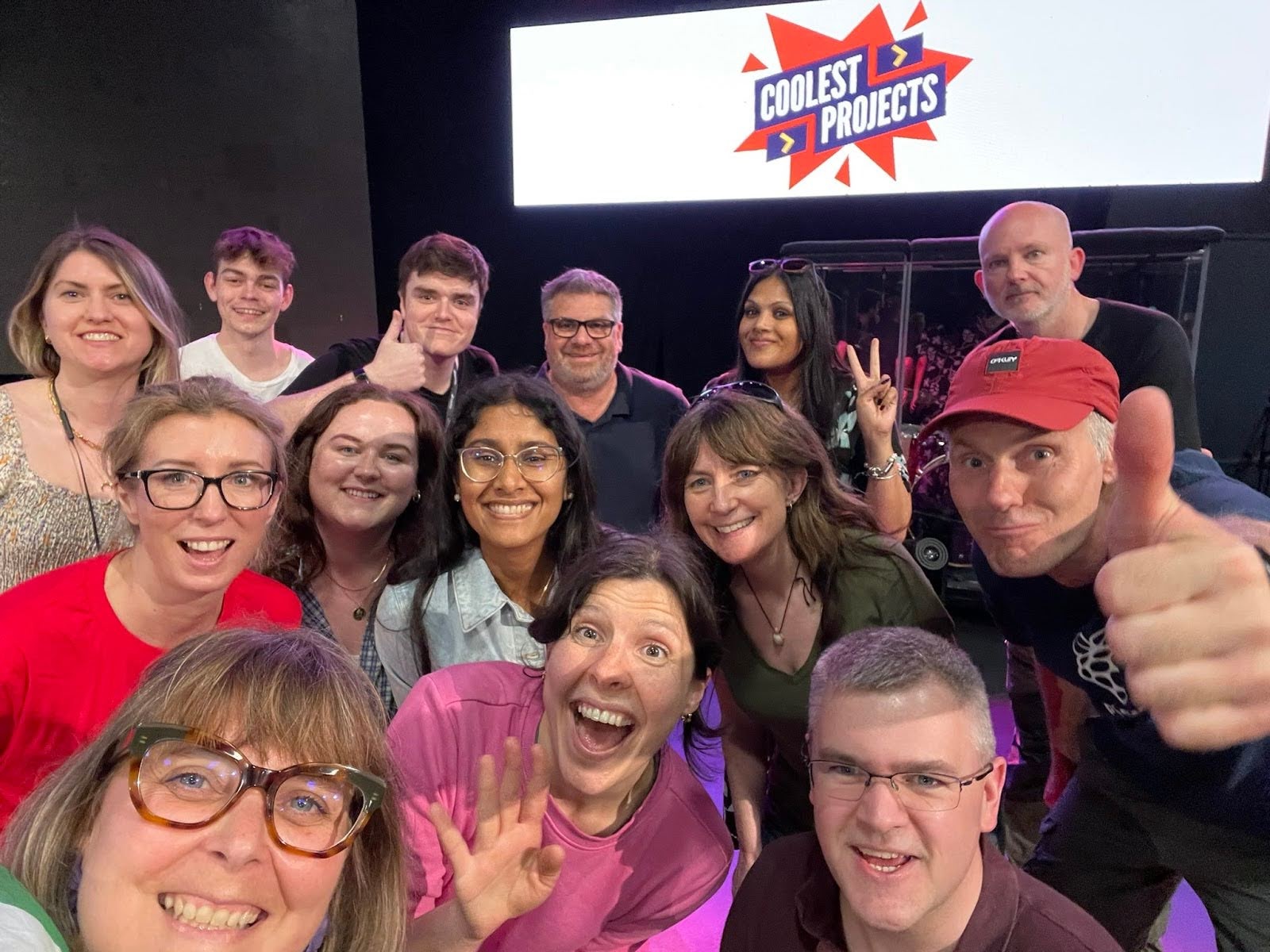
Already counting down to next year’s Coolest Projects UK!

Back in May, members of the Code Club team headed to Bradford for Coolest Projects 2024, a world-leading showcase for the next generation of digital creators and innovators. Jody, Community Coordinator, fresh from his experience, shares why he can’t wait to return in 2025:

People gathered around the camera taking a group selfie.
Members of the Code Club team at Coolest Projects

I’d heard a lot about Coolest Projects UK: how enthusiastic the children were about their work, the inspiring projects full of innovation and creativity, and the energy in the room. And it didn’t disappoint — there was such a vibrant atmosphere, it was hard not to be swept up by it all! I really enjoyed meeting many of the young people and was inspired by how much effort they had all put in — I definitely want to go next year!

Building a Code Club network in remote Pune, India

Vasu, National Community Manager in India, shares a memorable Code Club visit:

In December 2023, I visited two Code Clubs run by the Bidkar Foundation, a non-governmental organisation dedicated to bringing the transformative power of coding education to underserved communities in Pune, India.

Children sat on the floor, whilst Vasu stands in front of them.
Vasu meets young coders in Pune

The lovely Bidkar family, consisting of Manoj Bidkar and his daughter and son, run these clubs. One is located in a school, while the other is in a very remote area, literally on top of a hill. On my way to visit the club, I almost felt lost, with no mobile service in some places — imagine how the children learn in such an isolated location! Despite these challenges, every child attending the club does so out of their own choice, making significant efforts to come from nearby villages. This level of dedication is truly brilliant. I felt honoured to visit these clubs.

Code Club USA connects with Atlanta educators

Kevin, Program Manager in the USA, values connecting with community members at in-person events. Find out what they’ve been up to:

Our first event of the year was hosting an educator pop-up in Atlanta, Georgia where we invited community members to reconnect with us and learn what’s new with Code Club!

A group selfie taken at night with a building behind them.
The US team in Atlanta

We all know how difficult it was to navigate staying connected during the pandemic, so when the opportunity to gather in-person was brought to us by US educator Yolanda Payne, we were thrilled! We met at the beautiful Georgia Tech University campus and invited community members to join us to introduce our new Executive Director Sofia Mohammed, share experiences, and learn about our new strategy on how we’re aiming to bring more Code Clubs to youth across the country. We even had a special guest join us: the Raspberry Pi Foundation’s CEO, Philip Colligan!

We can’t wait to host more meetups with even more community members across the US!

Code Club expands in Africa, welcoming new partners from Kenya and South Africa

In South Africa and Kenya, our Code Club work has grown over the past six months. Rujeko, our Community Coordinator, shares a June milestone:

In June, we welcomed 5 new African partners to our global Code Club community! We’ve got 3 new partners from Kenya: Steamlabs Africa, Futures Infinite, and Lewa. And 2 are based in South Africa: Waloyo and Blue Roof (Keep a Child Alive).

A group of adults standing together.
Rujeko with Code Club leaders in South Africa

The training sessions we facilitated for them were well attended and there was great interaction. It was a very meaningful experience for me (I love Africa!), and I can’t wait to support our partners and their communities on their Code Club journey!

A warm welcome awaits at Arthurstone Library, Dundee, Scotland

This year, we welcomed Rebecca, our Community Coordinator for Scotland, to the team. Find out how her first Code Club visits went:

A selfie taken outside of a building.
Rebecca on her first Code Club visit

One of the first Code Club visits I made was to the Code Club at Arthurstone Library in Dundee. I was so impressed by the creativity and enthusiasm of everyone involved. I met some young people who had been attending for over a year, and someone attending for the first time! My favourite moment was when an older member offered to help the newest member, making them feel instantly welcome and part of the team. When the club leader asked if they’d return next week, the response was a resounding “Of course!”

Tell us your highlights of the past academic year! Share it on LinkedIn, X (formerly Twitter), and Facebook using the hashtag #MyCodeClub. We’d love to share your highlights with the community!